10 years on: how GB women's hockey gold in Rio changed the sport
A decade has passed since Great Britain's women's hockey team beat the Netherlands on penalties to win Olympic gold in Rio, a moment even the late Queen struggled to watch. The anniversary prompts reflection on the team's legacy and the sport's uneven growth since.
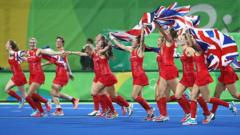
On 19 August 2016, Great Britain's women's hockey team won Olympic gold in Rio de Janeiro, beating the Netherlands on penalty strokes after the final finished 3-3, with the decisive strikes coming from Helen Richardson-Walsh and Hollie Pearne-Webb. It was Britain's first Olympic hockey gold since the men's team won in 1988.
Around nine million people watched the match on the BBC back home, including the Royal Family at Balmoral. Speaking on a BBC Radio 5 Live programme marking the anniversary, Sophie, Duchess of Edinburgh, recalled that the late Queen found the tension so unbearable during the penalty shoot-out that she repeatedly left and returned to the room to check on the score.
Going into the final, the Netherlands were the reigning two-time Olympic champions and world number one, chasing a third consecutive title. Despite this, players including captain Kate Richardson-Walsh and coach Danny Kerry felt it was their time to win, buoyed by team superstitions. Helen Richardson-Walsh said she sensed victory was theirs after noticing the Dutch players seemed unusually nervous before kick-off.
A decade later, every member of that squad except Lily Owsley has retired from international hockey. The team went on to win bronze at the Tokyo Olympics, but left Paris 2024 without a medal - the first Games since 2008 without a British women's hockey medal. Since 2021, the squad's only major title has been Commonwealth gold in 2022.
An anonymous former GB international told BBC Sport that England Hockey was not prepared to capitalise on the 2016 win, lacking the commercial and participation infrastructure to sustain long-term growth. Chief executive Rich Beer, appointed in 2025, said the governing body has since worked to raise the sport's visibility, including regaining broadcast rights.
Participation among adult women has grown only modestly since 2016, while participation among under-16s has fallen sharply. Beer acknowledged perceptions of hockey as an elitist sport persist and said the federation cannot match the funding available to wealthier professional sports.