At 22, Lithuanian artisan keeps centuries-old weaving traditions alive
22-year-old Tomas Antropikas from Lithuania learns and reconstructs traditional weaving crafts based on museum archive samples. He says the craft has become less a hobby and more a necessity in his life.
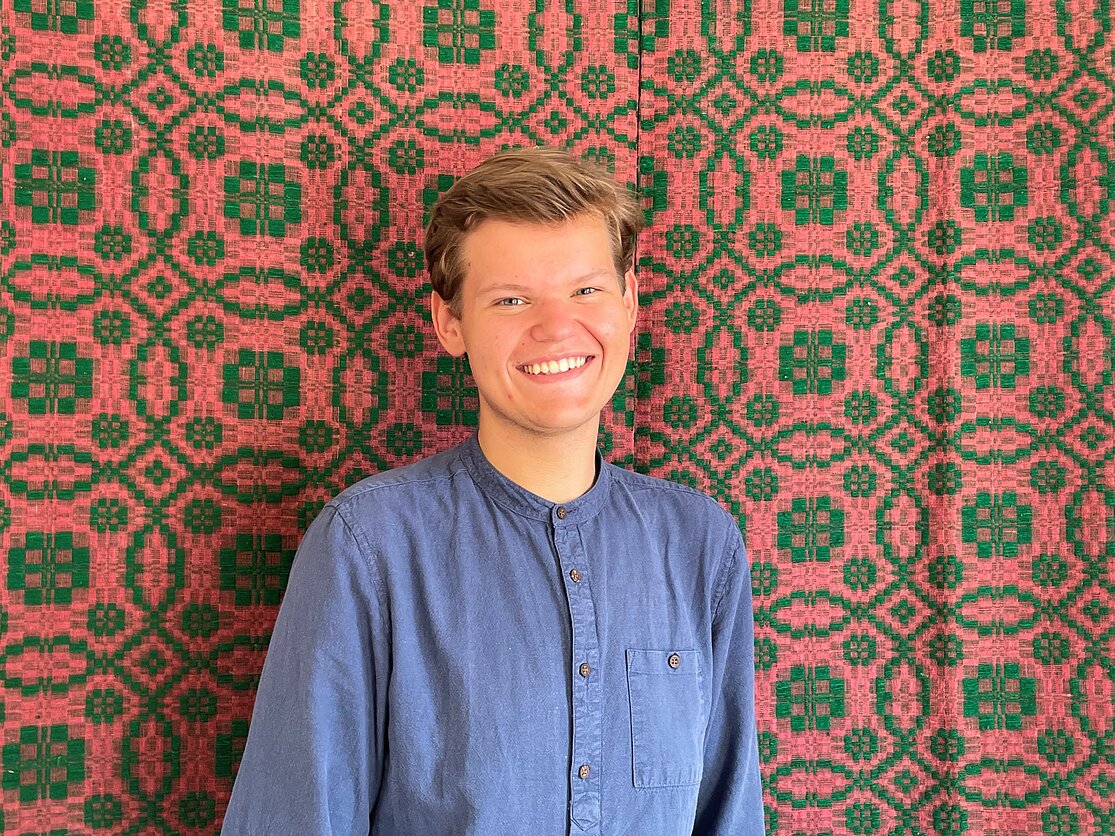
In Lithuania, 22-year-old Tomas Antropikas practises a craft usually associated with older generations — weaving and reconstructing traditional textiles and folk costumes. His home holds four looms, currently producing a shawl based on an authentic pattern from the village of Marcinkonys in southern Lithuania, and fabric for a skirt following a design characteristic of the Punsk area near the Lithuanian-Polish border.
His skills extend far beyond weaving itself. He dyes and spins yarn, weaves bands, braids baskets, crochets, knits, sews and embroiders, assembling complete traditional costume ensembles. The only element he does not make himself is footwear.
An interest sparked in childhood
Although his mother and grandmother were skilled at sewing, knitting and embroidery, Antropikas's own fascination began with a television programme he watched at around age five while staying at his grandmother's house. After seeing traditional woven bands featured on the show, he tried, before he could even read, to reproduce the technique using illustrations from a book. The turning point came in his final years of school, when a teacher first let him sit at a loom.
Antropikas has since completed a bachelor's degree in cultural history and anthropology at Vilnius University and is beginning his master's studies. His academic work closely intertwines with his craft — his thesis examined traditional skirts from the Dzūkija region, and he regularly researches museum collections and archives to make his reconstructions as historically accurate as possible, including determining original colours that may have faded over centuries.
A connection to family history
For Antropikas, the most meaningful recognition comes not from awards but from moments when his work reconnects people with their family past. At the Kaziukas Fair in Vilnius, a woman examining one of his shawls became emotional, telling him it resembled her grandmother's shawl — from Marcinkonys, the same village the museum piece he had reconstructed came from.
While traditional crafts are often linked to older generations, Antropikas believes a younger community is quietly emerging, immersing itself in handicrafts and traditional culture even without using cumbersome looms.