UAE's Lana Nusseibeh pledges 'relentless diplomacy' in bid to lead the UN
UAE Minister of State Lana Nusseibeh, a candidate to succeed António Guterres as UN Secretary-General, told Euronews she would act as the UN's chief mediator and take political risks for peace. Guterres's term ends on 31 December.
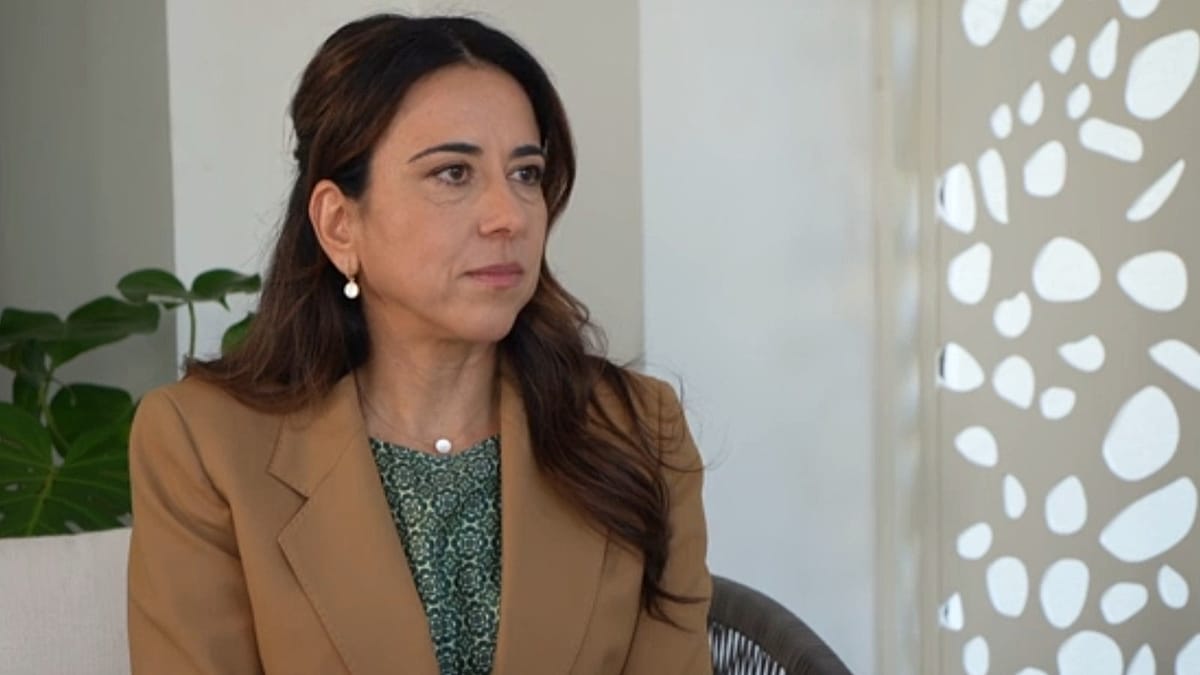
Lana Nusseibeh, the United Arab Emirates' Minister of State, has told Euronews that she would serve as the United Nations' chief mediator and take political risks for peace if elected Secretary-General. She was the UAE's ambassador to the UN for more than a decade. The race to replace António Guterres, whose term ends on 31 December, is entering its final phase.
Nusseibeh argues that the UN must return to its core purpose of bringing governments and people together for peace, development and prosperity in order to restore its credibility. She said the organisation is too often seen as absent from the 65 active conflicts she says exist worldwide. Her approach would be to seek humanitarian truces and aid access first, followed by a political strategy to make them last.
With official development assistance down 23%, she said the UN would need to narrow its scope, partner with others where they are better placed, and publish a scorecard of results for member states and donors. In her first 100 days she would agree a shared vision with member states and civil society, reduce duplication across the thousands of mandates given to the secretariat, and shift the UN's focus from headquarters to the field. She also plans a mediation board of outside experts and UN officials, and a focal point for protecting aid workers, 300 of whom she said were killed in the past year.
Ukraine and the Middle East
On Ukraine, Nusseibeh said any settlement must rest on the UN Charter's principles of sovereignty and territorial integrity, and that she would offer her good offices immediately. On Gaza, she cited Security Council Resolution 2720, which she negotiated in December 2023, and said Resolution 2803, endorsing a 20-point plan, had stalled.
First woman to lead the UN?
If chosen, she would be the first woman to lead the UN since its founding in 1945. She said she is running on the strength of two decades of diplomatic experience, not because she is a woman. Responding to critics who question her independence, she pointed to Article 100 of the UN Charter, which stipulates the secretary-general's independence. She has taken leave from her ministerial post to campaign.
The Security Council's informal straw polls have not yet produced a candidate free of opposition from all five permanent members. According to the source, former Costa Rican Vice President Rebeca Grynspan still holds a lead, while Rafael Grossi, Argentina's Director-General of the International Atomic Energy Agency, is also campaigning actively.