Administrative court chief rejects Dombrava's claim of distorted history in residence permit ruling
The chair of Latvia's Administrative District Court, Ojārs Priedītis, has denied Interior Minister Jānis Dombrava's claim that a ruling distorted history. The court says it assessed human rights and family life protection, not Latvian history.
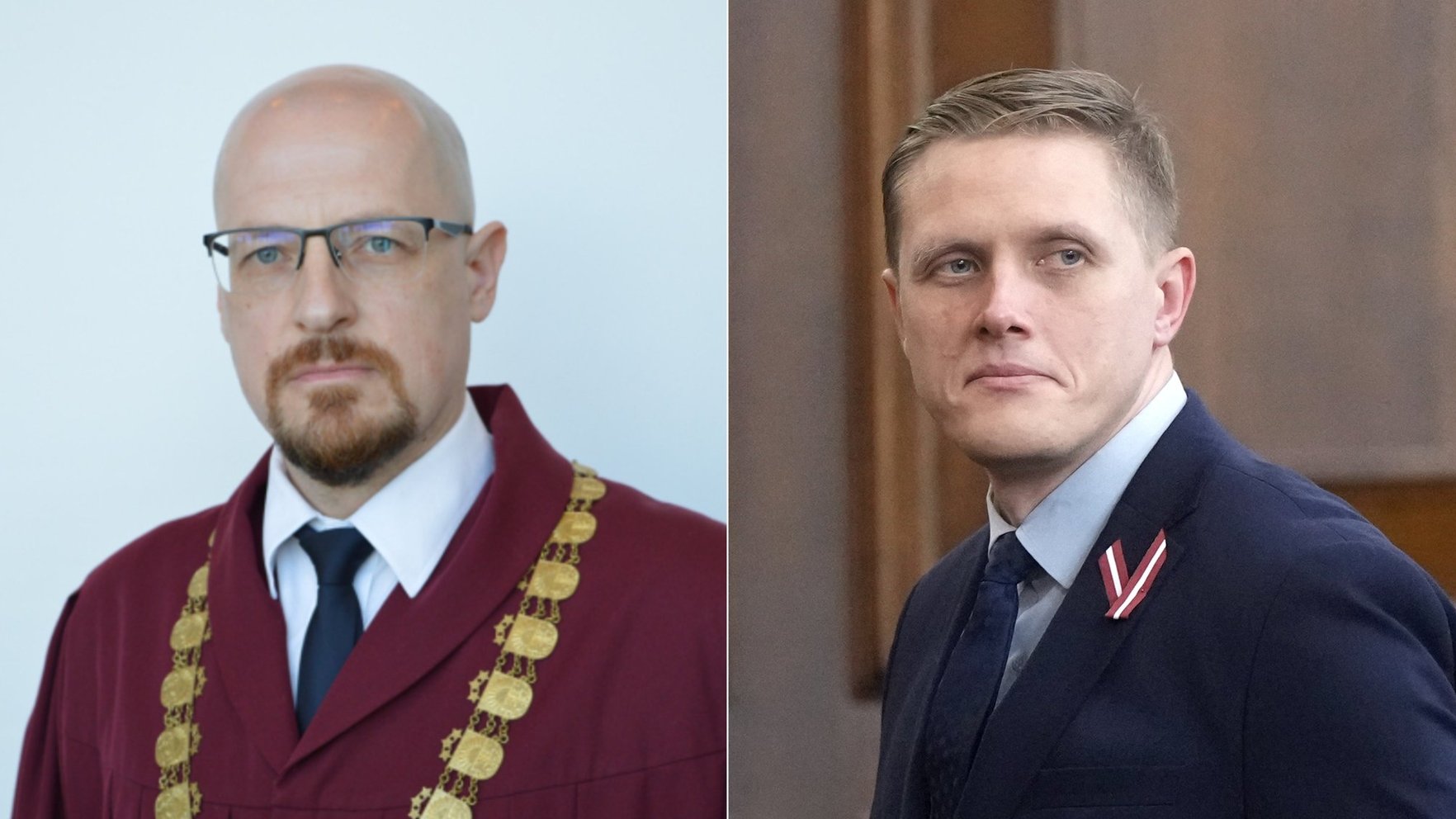
The chair of Latvia's Administrative District Court, Ojārs Priedītis, has categorically rejected Interior Minister Jānis Dombrava's accusation that the court used a distorted interpretation of history in a decision on a residence permit for a Russian citizen. The court stated that the case concerned the protection of human rights and family life, and that questions of Latvian history were not examined at all. The dispute matters because it touches on the line between public criticism and the actual content of court rulings.
The minister's criticism
On social media, Dombrava wrote that he had recently received a final decision from the district court, which cannot be appealed, obliging him to grant a temporary residence permit to one Russian citizen. According to the minister, he was surprised not by the decision itself but by the reasoning in the text. He claimed it did not mention the fact of Latvia's occupation and described the Soviet-era movement of people as internal migration within a single state. He also criticised the court for not taking into account the status of Latvian as the only official language, and the fact that the person, despite living in Latvia for a long time, had not learned it.
Dombrava said that since taking office he had refused all applications by Russian citizens for residence permits in Latvia, except this one.
The court's explanation
The court clarified that it had examined only an interim protective measure that applies while proceedings are under way, not the case on its merits. It found that the right to respect for family life cannot be determined solely by a person's formal legal status. Under rulings of the European Court of Human Rights, actual relationships, their duration, stability and emotional ties also matter.
Priedītis said humanitarian considerations were taken into account: the person's long residence in Latvia and the fact that two minor children have been in her out-of-family care since 2019. He stressed that public criticism must rest on the actual content of a decision, not on claims attributed to it.