In Afghanistan, women often go untreated because only female doctors may treat them
In many parts of Taliban-ruled Afghanistan, male doctors are no longer allowed to treat women, and a UN report points to the consequences for healthcare. Cuts in international aid funding are making the situation worse.
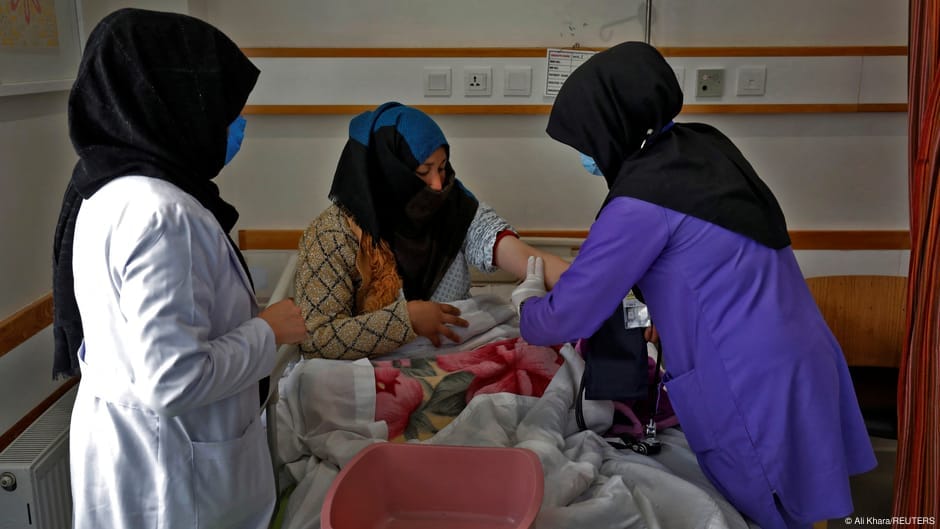
In many parts of Afghanistan, which is ruled by the Taliban, male doctors are no longer permitted to treat women. A recent report by the United Nations has highlighted the consequences. It describes a woman from Kunar province who suffered several miscarriages without being able to get medical care. Her case reflects a growing number of pregnant women who urgently need help but cannot receive it because of Taliban restrictions. Women's access to essential healthcare is shrinking overall, owing both to those restrictions and to cuts in international aid funding.
A series of bans
Since returning to power in 2021, the Taliban have issued more than 100 decrees that severely limit the lives of women and girls. Girls are barred from secondary education, women are denied access to universities, and opportunities to work outside the home are sharply restricted. The UN Assistance Mission in Afghanistan (UNAMA), which monitors the human rights situation, reported in September 2025 that inspectors from the Taliban's Ministry for the Promotion of Virtue and Prevention of Vice were further restricting women's access to healthcare by enforcing rules and decrees. According to the UN, about 2.6 million girls are excluded from secondary education, and UN Women warns this is likely to bring more early marriages and higher maternal mortality.
Activist and legal views
Tamana Zaryab Paryani, a 28-year-old Afghan women's rights activist who reached Europe after being detained in Kabul in January 2022, addressed the UN Security Council at the end of October. She told Deutsche Welle that what is happening is "gender apartheid". Haroon Mutasem, a professor of international criminal law, describes it as an institutionalised system of oppression and warns that failing to respond could undermine the universal validity of human rights.
Susan Ferguson, the UN's Special Representative in Afghanistan, has called the situation the world's worst women's rights crisis. She says funding cuts are forcing humanitarian organisations to decide which women and girls can be helped and which must be turned away.