Agrosimex Expert: Zn/Mn Fertiliser Pays Off at Small Yield Gains in Rapeseed and Wheat
An expert from the Polish company Agrosimex says the autumn-applied micronutrient and biostimulant product Maral Zn/Mn pays for itself with a yield gain of 13 kg/ha in rapeseed and 35 kg/ha in wheat. The claims come from the manufacturer's representative.
In a piece published by the Polish farming portal Farmer, Iwona Janda-Malina, a fertiliser expert at the company Agrosimex, explains why winter crops are worth treating this autumn with the product Maral Zn/Mn. It is a liquid preparation containing zinc, manganese and nitrogen, plus a seaweed extract with amino acids and plant hormones. The article reflects the view of a manufacturer's representative, not an independent study.
Yield gain needed to break even
According to the expert, at a dose of 0.6 l/ha (the recommended range is 0.5–0.6 l/ha) the investment pays back if rapeseed yield rises by 13 kg/ha. In wheat, payback starts when yield is higher by 35 kg/ha. She says the company's trials produced considerably larger gains, but gives no specific figures.
Drought and rapeseed condition
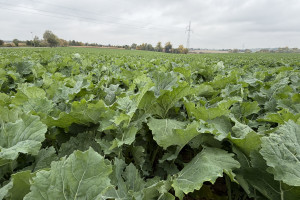
The expert notes that many farmers sowed rapeseed more densely this year, because last year's stands were thinned by drought and flea beetle feeding. Emergence this year was generally very good, but development stages differ widely: one field has rapeseed with 12–14 leaves, another 6–8. Most of Poland has had drought since spring; August rainfall improved only the topsoil, while deeper layers remain short of water.
How the product works
Zinc and manganese influence nitrogen management in the plant. Maral Zn/Mn contains auxins, which drive root development. Janda-Malina says that in tests at the Institute of Plant Protection in Poznań, a 0.5 l/ha dose on rapeseed and cereals markedly accelerated root growth within five weeks of application. Applied in spring, she says, the plant receives cytokinins and gibberellins, which promote growth of the above-ground parts.
Timing
For cereals, she recommends autumn application, especially on later-sown fields. If November is warm, treatment can continue until the end of autumn vegetation; if it is missed, it can be done in early spring.