The forgotten architect Wacław Michniewicz: the sad fate of the man behind Vilnius' Halė Market
Lithuanian architect Wacław Michniewicz designed Vilnius' Halė Market, the National Drama Theatre and the Kaunas Mosque, yet the Soviet authorities left him without property and means in his last years. After his death, his family was deported.
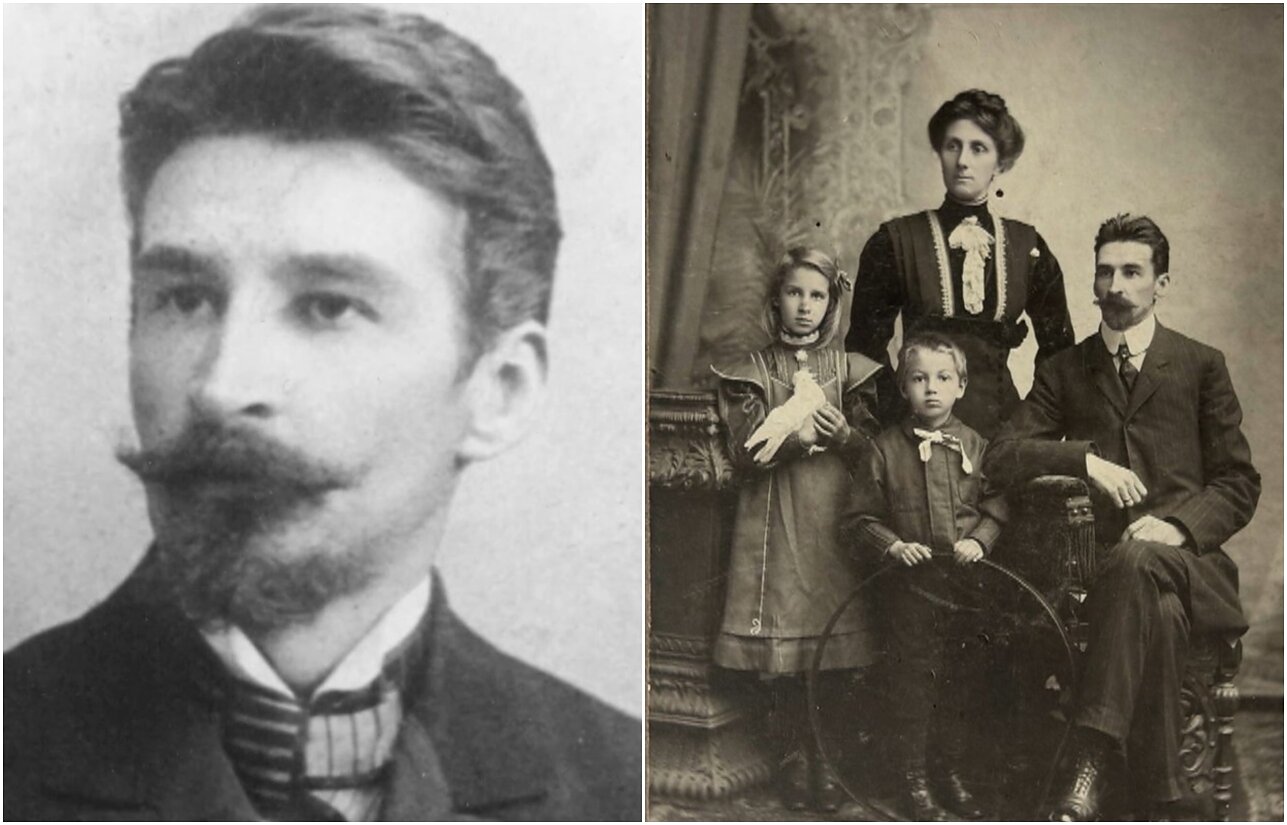
Lithuanian architect Wacław Michniewicz (Vaclovas Michnevičius in Lithuanian) designed several of the country's best-known buildings, including Vilnius' Halė Market, the Old Theatre of Vilnius, the Lithuanian National Drama Theatre and the Kaunas Mosque. Yet the man himself remains relatively unknown. He lived quietly on his country estate, avoiding the fame of big cities, and after the war the Soviet authorities seized the estate. After his death, his family was deported.
The estate at Strebeikiai
The Michniewicz estate stood in Strebeikiai, in the Jonava district, surrounded by tobacco plantations, with lilacs and jasmine in the yard. After work in Vilnius or Kaunas, the architect would sit down to eat with farmworkers, preferring simple home cooking, especially potatoes and sour milk. Local historian Artūras Narkevičius recalls that he held that what mattered was not clothing but having a good head.
Michniewicz designed at least 30 churches across Lithuania, including in Birštonas, Žiežmariai, Vievis, Ukmergė and Ramygala. Ethnologist Libertas Klimka says the architect was not interested in documenting his work. Some historians believe the real number could be twice as high.
Legacy in Vilnius and Kaunas
The Halė Market in Vilnius was completed in 1906, and its metal structures have survived largely unchanged. Michniewicz also designed hospitals, barracks, warehouses and apartment buildings, and took part in creating the Montvila housing colonies. In 1919 he moved from Polish-administered Vilnius to Kaunas, then Lithuania's provisional capital. There the Kaunas Mosque was completed in 1931, the first brick mosque in the Baltic states, even though the local Tatar community numbered only about 100 people.
He regarded Žeimiai Church as his finest work and designed it free of charge. In 1915, during World War One, retreating Russian troops mined it. Michniewicz restored the damaged tower, and its lighter-coloured bricks are still visible today.
Loss and a secret burial
In 1946 the Soviet authorities confiscated his land and estate, turned the house into a school and left him one room. According to accounts from estate workers, his library and drawings were burned. He later suffered paralysis. After his death, his elderly wife, daughter and grandchildren were deported. His wife never returned to Lithuania, while his daughter's family settled in Poland. Michniewicz was buried secretly beside Žeimiai Church.