Albania's young people protest in the "Flamingo Revolution" instead of emigrating
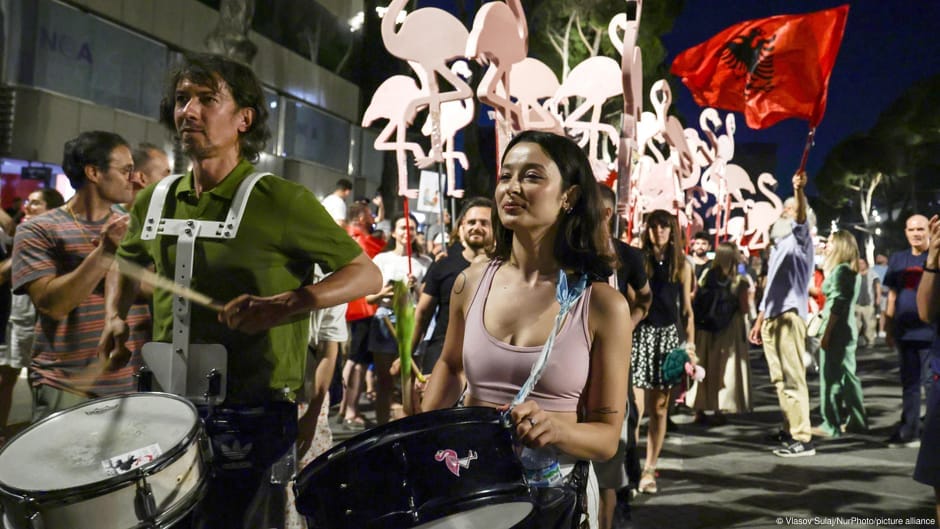
Protests against corruption and Prime Minister Edi Rama's government, known as the "Flamingo Revolution," have been under way in Albania since May. Young people who once left the country in large numbers are now demanding change at home.
In mid-October, students in Albania's capital, Tirana, set a suitcase on fire and threw it into the courtyard of the Education Ministry. The symbolism was clear: according to the 2023 census, the population of the Western Balkan country fell by about 420,000, or nearly 15%, between 2011 and 2023, mainly because of emigration. Now young Albanians say they want to stay and demand that the political system change.
From a resort to government criticism
The social movement, called the "Flamingo Revolution," began in May with demonstrations against a luxury resort in a coastal reserve, a project involving Ivanka Trump, daughter of US President Donald Trump, and her husband Jared Kushner. The protests soon grew into wider discontent with corruption, Prime Minister Edi Rama's government, his ruling Socialist Party and the entire political class.
For four months, thousands of people marched almost every evening, and the protests were largely peaceful. On October 13, however, a student demonstration escalated into clashes with police. Unrest has continued since then, with police using tear gas, water cannons and rubber bullets. Hundreds of people have been arrested, many have been injured, and public and private property has been damaged.
Protesters demand Rama's resignation, a transitional government, electoral reform and new elections. The movement has no leader and draws support from across the political spectrum. Rama has blamed "foreign hands," but there appears to be little evidence that outside actors are organizing the protests.
Underlying causes
The protests are rooted in corruption, the high cost of living and low wages. Several factors have converged recently: high-level corruption charges, including against ministers and two of Rama's former deputies, rising prices, and a new generation measuring Albania against EU standards. According to the Albanian Institute of Statistics (INSTAT), half of employees earn less than 60,000 lek (about €620) a month after tax. Real estate prices in Tirana have nearly doubled since 2018.
Rama, in office since 2013, has rejected calls to resign and invited protesters to talk, an offer they have so far refused. He argues that stepping down would jeopardize Albania's goal of joining the European Union by 2030.