Albania's student protests grow bigger and more intense
Albania has seen almost five months of anti-government protests, and students now clash with police nearly every day. Prime Minister Edi Rama calls the unrest a "hybrid war", a claim experts and the opposition question.
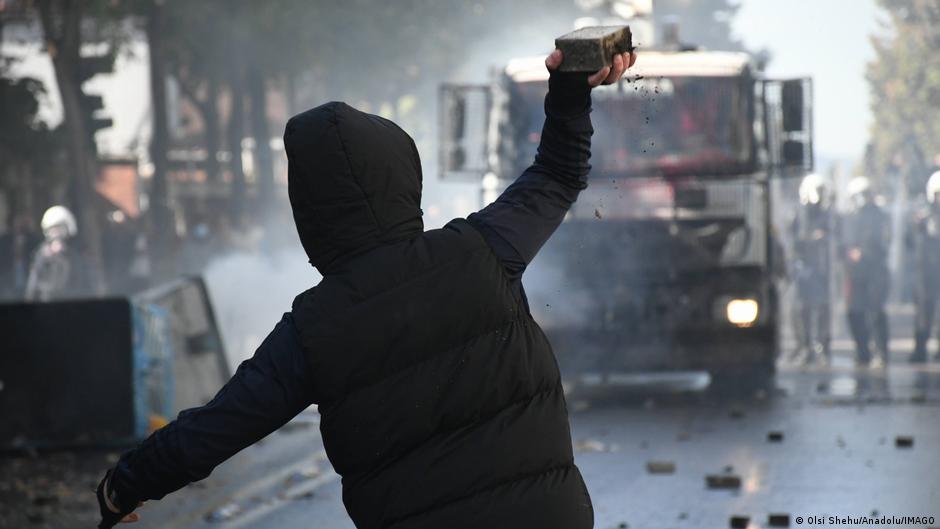
Students and faculty from the University of Tirana gathered outside the Education Ministry in Albania's capital on Tuesday to voice their continued discontent with the government. Smashed windows and soot from fires are still visible on the building after the protests of October 13. Some protesters began throwing stones at the ministry, and police pushed demonstrators and journalists back and used water cannons to disperse the crowd.
The protests in Albania, a Balkan country, began nearly five months ago. They were initially triggered by published plans for a luxury hotel complex inside a nature reserve, intended by Jared Kushner, a son-in-law of US President Donald Trump, and associates. The movement has since grown into broader anti-government and anti-corruption protests. University and high school students now clash with police almost daily, with the fiercest confrontations so far taking place last week. Protesters denounce corruption, poorly run universities and rising education costs, and demand the resignation of Prime Minister Edi Rama, in office since 2013.
Organising online
Besmir Semanaj, an Albanian cybersecurity advocate, says young people no longer organise through parties or associations but on social media. They use Instagram, WhatsApp groups, Telegram channels and TikTok, while those most concerned about security use Signal. According to him, the structure is horizontal, with no leaders or central command, which makes the situation hard for the government to understand and control.
Rama: "hybrid war"
Rama has called the youth uprising a "hybrid war". Over the five months he has accused various "true" masterminds, naming the governments of Greece, Russia and Iran, and most recently "antifa", a decentralised global anti-fascist movement. Redion Qirjazi, a security affairs researcher, says no verifiable evidence has been presented of an organised antifa structure in Albania. In his view, such claims may serve to divert attention from the real causes, delegitimise protesters and justify a tougher crackdown.
Arlind Qori, chairman of the opposition social-democratic Together Movement, which holds one seat in parliament, says young people are driven onto the streets by poverty, a declining education system and a lack of prospects. He says their central demand is the prime minister's resignation.