Analysis finds Russia-linked accounts amplified far-right narrative during Ceuta migration crisis
A counter-disinformation group found accounts tied to the Russian military reached over 500,000 people with far-right messaging in the early days of the Ceuta crisis, in what researchers describe as an unusually fast and organised disinformation surge.
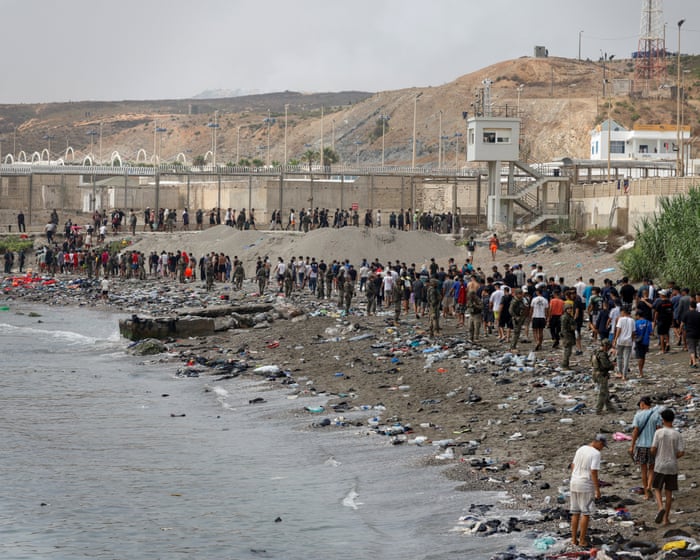
Accounts with ties to the Russian military spread far-right narratives about a migration crisis at the Spanish enclave of Ceuta, reaching more than 500,000 people within the first days, according to an analysis by counter-disinformation group 411.
The crisis began on 1 August after roughly 49,000 people attempted to cross into Ceuta from Morocco overnight, part of a broader multi-day event in which an estimated 72,000 migrants entered the small north African territory. Examining about 4.5 million social media posts, 411 found that accounts framed the crossings as a deliberately coordinated "assault," implying authorities were complicit, with some adding Islamophobic or antisemitic conspiracy theories. These narratives spread in seven languages and drew more than 720,000 views within six hours on 1 August.
Some accounts called on nationalists to travel to Ceuta and "patrol" businesses and homes, with signs of coordination among these calls.
The analysis also confirmed that prospective migrants engaged in organic "peer-to-peer" logistics chatter online, largely in comments beneath viral Ceuta videos, sharing tips on how to make the crossing — this activity appeared to come from small, anonymous accounts rather than any organised recruiter network.
One source of the far-right propaganda was Rybar, a Telegram channel linked to Russian intelligence whose parent company has faced European sanctions. A network of accounts, including some tied to the pro-Kremlin Pravda network, then amplified Rybar's posts.
411's lead researcher, Ned Mendez, said the disinformation spread considerably faster than during a similar 2021 crossing incident involving about 8,000 migrants, with nationalist groups gathering in Ceuta's main square within just days this time. Both Mendez and Saman Nazari of the Brussels-based Alliance4Europe warned that the coordination points to an established "machinery" that could be ready to activate again at the next Mediterranean border incident.
/nginx/o/2026/09/21/17929633t1h130f.jpg)
