Google's motion-sickness-easing Motion Assist feature begins rolling out on Android
Google has started rolling out Motion Assist, a feature that displays moving dots on screen to help reduce motion sickness while using a phone in a moving vehicle. It is currently appearing on Pixel phones running Android 17.
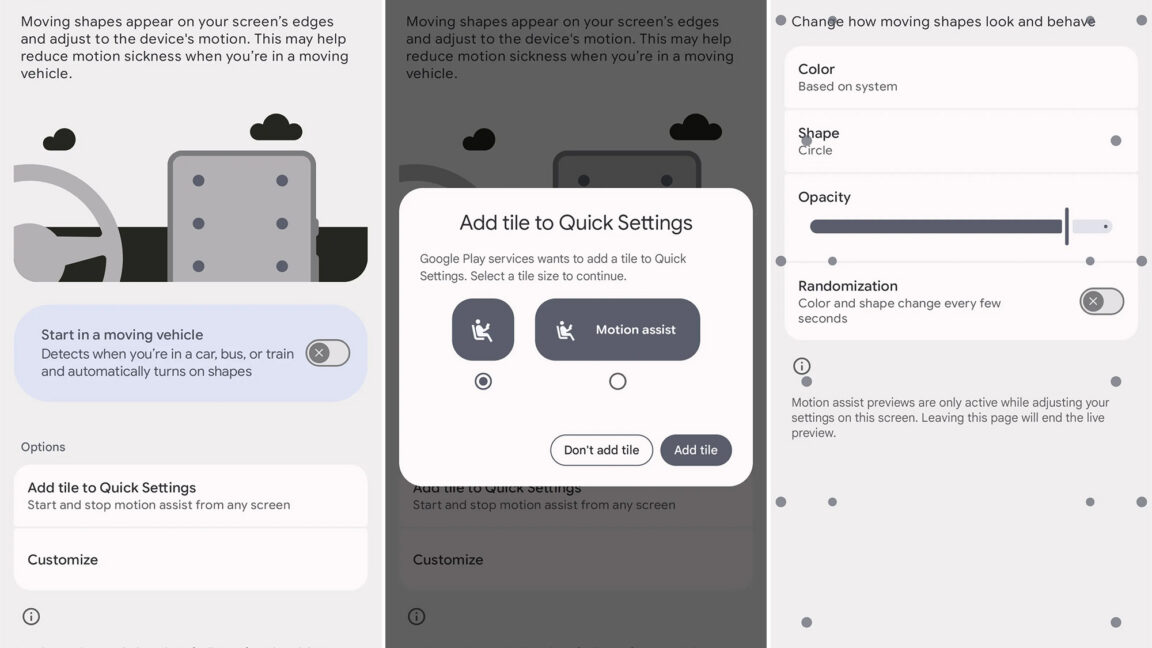
People prone to motion sickness often find it uncomfortable to read or use a phone while riding in a moving vehicle. Google is now addressing this with a new Android feature called Motion Assist.
Motion sickness occurs when there is a mismatch between what the inner ear senses and what the eyes see. Looking at a screen or book while traveling can amplify this sensory conflict, leading to nausea.
A similar approach to Apple's
Apple introduced a comparable solution back in 2024 with iOS 18's Motion Cues feature, which overlays a network of moving dots on the screen to ease discomfort, reportedly with good results. Google's version works on a similar principle but is called Motion Assist.
Google first began testing Motion Assist in 2024, but the feature had remained limited to internal testing until now. According to Android Authority, Motion Assist is now appearing on Pixel phones running Android 17. There is no separate app or update to install — the feature is being delivered gradually through Play Services as part of a staged rollout.
How it works
Once activated, Motion Assist places small dots around the edges of the screen, layered over the visible content. The dots are linked to the phone's accelerometer and gyroscope, allowing them to move in sync with the vehicle's motion — traveling downward on the screen when moving forward, or sideways when the vehicle turns. This mimics how objects in the real world would appear to shift in peripheral vision if the user weren't focused on the screen.