UN Human Rights Chief Warns AI Is Governed in a Near-Medieval Way
UN High Commissioner for Human Rights Volker Türk warned in Geneva that control over AI computing power is concentrated in a few companies. He called for a rights-based regulatory framework.
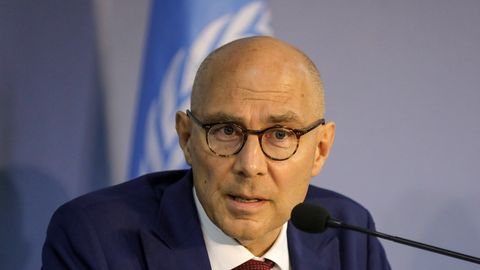
UN High Commissioner for Human Rights Volker Türk warned on 19 November at the RightsX summit in Geneva that artificial intelligence (AI) is being governed in an almost medieval fashion, with power over the technology concentrated in the hands of a few tech magnates. He called for a rights-based regulatory framework, noting that there are still no common rules governing AI.
Power in a few hands
Türk said that behind the futuristic narrative of AI lies an age-old story about power. According to him, five technology companies own more than 70% of the world's AI computing power, which he described as a clear democratic deficit. The commissioner stressed that such power is exercised by a privileged few with practically no checks, balances, participation or accountability.
"History has taught us that when there is this kind of power, the first to suffer are the rights and freedoms of ordinary people," he said.
Risks for society
Türk noted that AI increasingly shapes people's lives, often without their knowledge. The technology can distort public debate in "subtle and insidious" ways and create injustice on a large scale. As transport, food and healthcare become increasingly digitalised, he suggested the day may not be far off when AI could shut down critical infrastructure for entire communities or countries, either on its own or in the wrong hands.
He asked who decides which risks society takes when the possibility of civilisational collapse due to AI is being discussed.
A call for regulation
Türk emphasised that the benefits of AI should be shared fairly, which requires not only the goodwill of tech companies but also regulation and accountability. He revealed that he had written to leading AI companies urging them to introduce effective safeguards before it is too late.
Using an everyday comparison, the commissioner said a bottle of milk cannot reach a store without a series of checks, rules and regulations, so for AI too "there is no doubt that some kind of regulation is needed". He expressed optimism that people will ultimately challenge unchecked power and that the democratic deficit will turn into a trust deficit.