UN Security Council to hold second straw poll on next secretary-general
The UN Security Council is holding a second informal vote on Friday to gauge support for candidates seeking to become the organisation's next secretary-general. Costa Rica's Rebeca Grynspan led after last month's first poll.
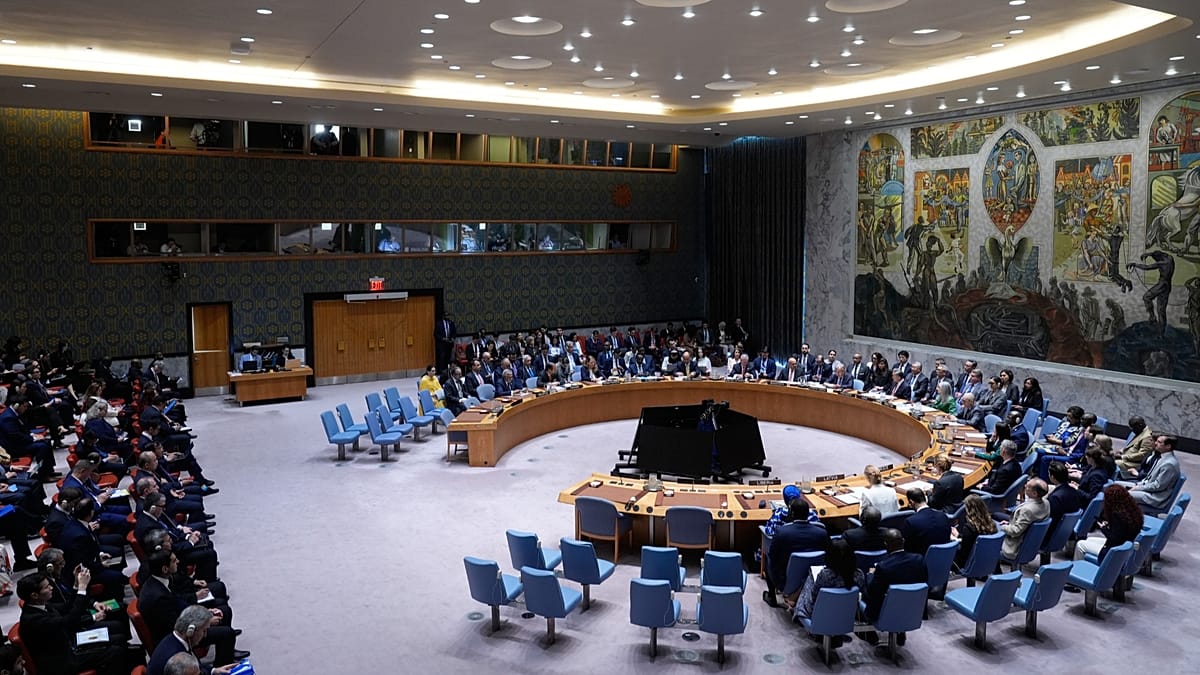
The UN Security Council is convening again on Friday for a second informal straw poll to measure support among a growing list of contenders for the post of UN secretary-general. After the first poll last month, in which all 15 council members, including the five permanent veto-holders, cast secret judgments, Costa Rica's Rebeca Grynspan emerged as the front-runner.
Other candidates include Argentina's Rafael Grossi, current head of the International Atomic Energy Agency, alongside Chile's Michelle Bachelet, Ecuador's Maria Fernanda Espinosa, Guyana's Carolyn Rodrigues-Birkett, Uganda's Olara Otunnu and Senegal's Macky Sall. Another Ecuadorian, Ivonne A-Baki, entered the race after the first round concluded. Whoever is chosen will succeed current secretary-general António Guterres, whose second five-year term ends on 31 December.
Daniel Forti of the International Crisis Group said the second poll may offer clearer signals about the direction of the race, though no candidate is likely to secure a decisive lead. He noted the five veto-holding powers — France, Russia, China, the UK and the US — may withhold their preferences until later, and that new candidates could still emerge. Russia's UN ambassador, Vassily Nebenzia, confirmed that additional contenders could appear if the current field reaches a deadlock.
How the process works
To advance, a candidate needs at least nine of the 15 council votes and must avoid a veto from any of the five permanent powers. A successful nominee then goes to the General Assembly for final confirmation. The straw-poll system dates to the early 1980s, created to resolve a deadlock between two vetoed candidates, and has continued in various forms despite criticism over its lack of transparency.
By long-standing tradition, the top UN post is expected to rotate among world regions, and this time it is considered Latin America's turn — although two of the current candidates come from Africa instead.