External GPUs can boost laptop gaming, but bandwidth limits hold them back
External graphics processors let weaker laptops run demanding games, but Thunderbolt bandwidth restrictions and hardware costs limit their appeal. Razer and Framework revived interest in the category in 2025.
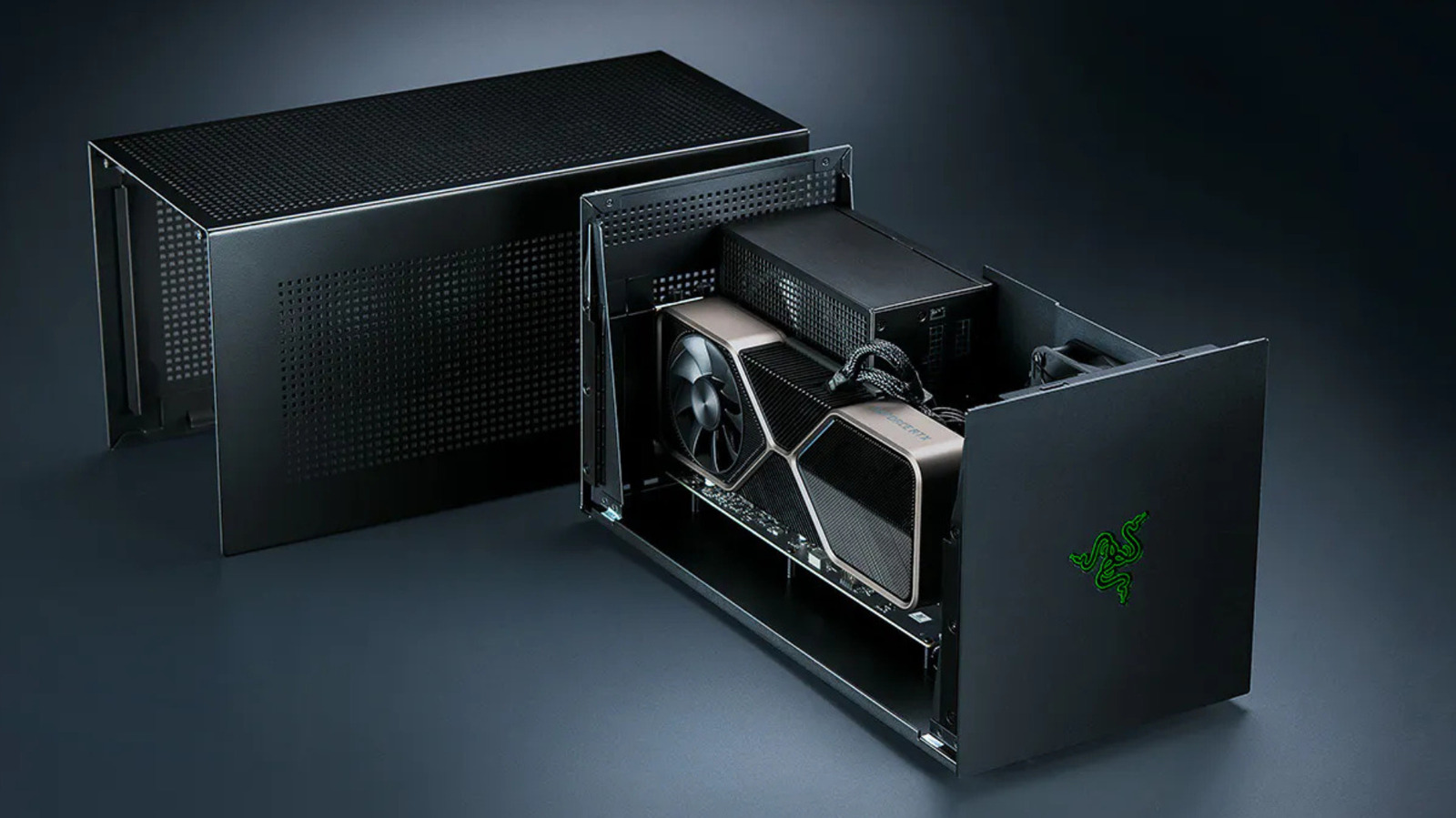
An external GPU (eGPU) offers a way to boost a laptop's gaming performance without buying a new machine. It typically consists of a desktop graphics card housed in an enclosure connected to a compatible laptop or gaming handheld via Thunderbolt or USB4.
However, the approach comes with notable trade-offs. A Thunderbolt 4 port carries 40Gbps of bandwidth, but only 32Gbps is allotted to PCIe data — an eighth of what a desktop PCIe 4.0 x16 slot provides. Testing site Notebookcheck evaluated an RTX 2080 Ti enclosure in 2021 and found performance deficits ranging from 7 to 32 percent compared to a desktop setup. Separately, PC Gamer tested an RTX 4070 Ti and found it ran roughly 25 percent slower over Thunderbolt than over OCuLink in many tests, with more stuttering and lower minimum frame rates. Testing also suggested that faster cards lose proportionally more performance over Thunderbolt, making mid-range GPUs a more practical choice for eGPU setups.
Cost and compatibility
Razer's $350 Core X V2 enclosure ships without a power supply or I/O ports, which must be purchased separately — including a Thunderbolt 5 dock starting at $390. Once the graphics card itself is added, total costs can approach what a budget gaming PC would cost. Framework, meanwhile, is developing an OCuLink solution for its Laptop 16 that offers up to 128Gbps of bandwidth, though it doesn't power the laptop and lacks the plug-and-play convenience of Thunderbolt.
Apple Silicon Macs have not supported eGPUs for gaming since the 2020 shift away from Intel chips. Apple did approve a driver called TinyGPU from the tinygrad project this year, but it is intended solely for AI workloads and offers no display output for gaming.