5,000-year-old solstice-aligned monument discovered near Stonehenge, possibly a prototype
Archaeologists have unearthed a 5,000-year-old monument aligned with the summer and winter solstices near Stonehenge in Wiltshire, which may have served as a prototype for the famous stone circle's solar orientation.
A remarkable discovery has been made in Bulford, just 3 miles from Stonehenge, by archaeologists digging ahead of Ministry of Defence housing construction. The site consists of two wooden poles set 120 metres apart, carbon-dated to around 3000 BC, the same period as Stonehenge's earliest phase. The poles were precisely aligned with the midsummer sunrise and midwinter sunset, making it the earliest solstice-aligned structure in the Wiltshire landscape and one of the first in Britain.
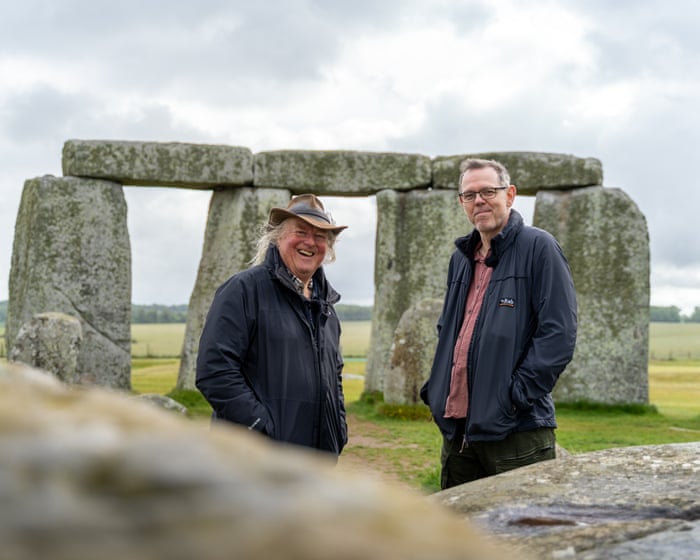
Phil Harding, the lead archaeologist from Wessex Archaeology and former presenter of Channel 4's Time Team, initially did not recognise the significance of the find. It was only when he later drew a line between the two unusually large postholes on the site plan that he realised the alignment. 'The thing that struck me as soon as I saw that was that [the line was] about 50 degrees off the direct north, which was pretty much the line of the midsummer sunrise. So I got really, really excited,' Harding said.
Fabio Silva, a skyscape archaeologist, confirmed that the wooden poles accurately lined up with the solstice positions in 2950 BC, based on extensive radiocarbon dating. The post pits were about one metre deep, suggesting the poles stood 3-4 metres high and would have acted like a gunsight for the solstice sun. A smaller pit near the alignment contained a rare disc-shaped flint knife that may have been shaped to represent the sun.
Matt Leivers, senior research manager at Wessex Archaeology, described the find as evidence of Stone Age religion. 'What we're seeing here is the religion of the stone age made manifest in the ground. Obviously we have no understanding of precisely what any of it meant, but the fact that time and again, over thousands of years, people are coming back to [the Stonehenge landscape] to build and rebuild and mark and remark this set of substantial events – it gives us an indication that this is religion,' Leivers said. He added that it was 'inconceivable' that the solstice celebrants at Bulford were unaware of those at Stonehenge, and they may have been the same people – possibly the builders of Stonehenge's first phase.
Harding called the discovery 'one of the greatest finds of my career'. 'Sites like this come along once in a lifetime, sometimes they don't come along at all,' he said. 'It doesn't matter whether you are a resident of Wiltshire or a resident of the Earth – everybody knows about Stonehenge. And to be able to contribute something to expanding our knowledge of Stonehenge is an incredible privilege.'