Archaeologists uncover ancient Byzantine city in Egypt’s western desert
Egyptian archaeologists have unearthed a well-preserved Byzantine-era city in the Dakhla oasis, along with 18 ancient tombs at Marina el-Alamein near Alexandria.
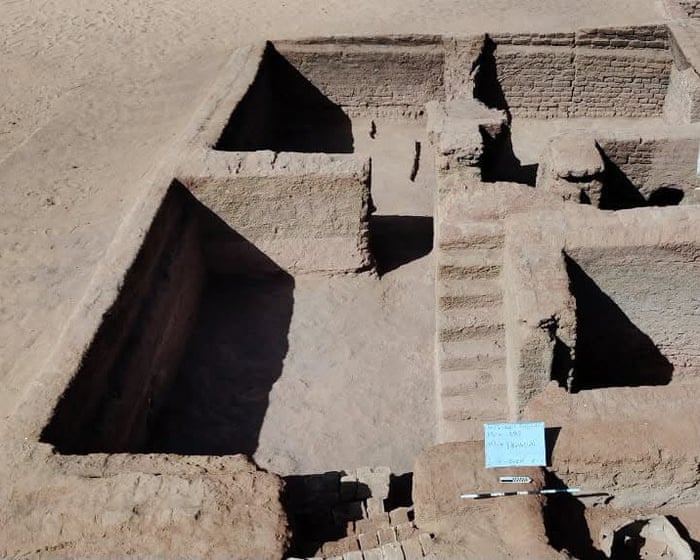
Archaeologists in Egypt have discovered a well-preserved Byzantine-era city in the western desert. The fourth-century quarters include residential and religious structures, such as a basilica-style church in the Dakhla oasis. Coins, pottery fragments, and tools were also found.
The tourism and antiquities ministry stated that the discovery reveals details of daily life, urban development, and economic activities during Egypt’s period as part of the Byzantine empire.
Hisham el-Leithy, secretary general of the supreme council of antiquities, said the unearthed quarters featured north-south thoroughfares intersected by east-west streets, forming open squares and public spaces.
Mahmoud Massoud, head of the archaeological mission, noted that a basilica dating back to the mid-fourth century stands at the settlement’s head, overlooking its main streets, along with remains of two watchtowers. The oasis, located in Egypt’s western New Valley province, is on UNESCO’s tentative list for world heritage.
Massoud added that a heavily fortified structure with thick defensive walls and many houses with reception halls and vaulted roofs were found. Among them is the house of Tisous, a church deacon, dating to the second half of the 14th century, believed to have served as a house church before the city’s basilica was built.
Archaeologists also uncovered bread ovens, kitchens, stone grinding tools, and bronze coins bearing portraits of Byzantine emperors, Latin inscriptions, and Christian symbols. A group of gold coins dated to the reign of Roman emperor Constantius II (337-361).
Diaa Zahran, head of the Islamic, Coptic and Jewish antiquities department, reported a collection of about 200 pottery fragments used as writing material (ostraca), with inscriptions detailing commercial transactions, correspondence, and other daily life details.
Separately, 18 ancient tombs were discovered at the Marina el-Alamein archaeological site, about 100 km west of Alexandria. These include 11 rock-cut tombs (average depth eight meters) and seven surface limestone-built tombs, bringing the total tombs at the site to 48. Pottery vessels, amphorae, lamps, plates, altars, and limestone basins were also found.
Mission chief Eman Abdel-Khaliq said they found a 2.5-meter-long granite sarcophagus with skeleton remains under study. Close by, remains of a plaster sphinx statue were found. Four gold pieces placed inside the mouths of some deceased, known as 'the golden tongue', reflect funerary beliefs of that era.
Marina el-Alamein, an archaeological site near the city of Alamein on Egypt’s northern coast, was uncovered in 1986. Archaeologists believe it was the ancient Greco-Roman port city of Leukaspis, built in the second century and thriving until the fourth century.