US scraps G20 foreign ministers' group photo after European objections to Lavrov
The US cancelled a planned group photo of G20 foreign ministers on Friday after several European diplomats refused to pose beside Russia's Sergey Lavrov and threatened to leave. The episode showed the tensions inside a forum facing the war in Ukraine and other crises.
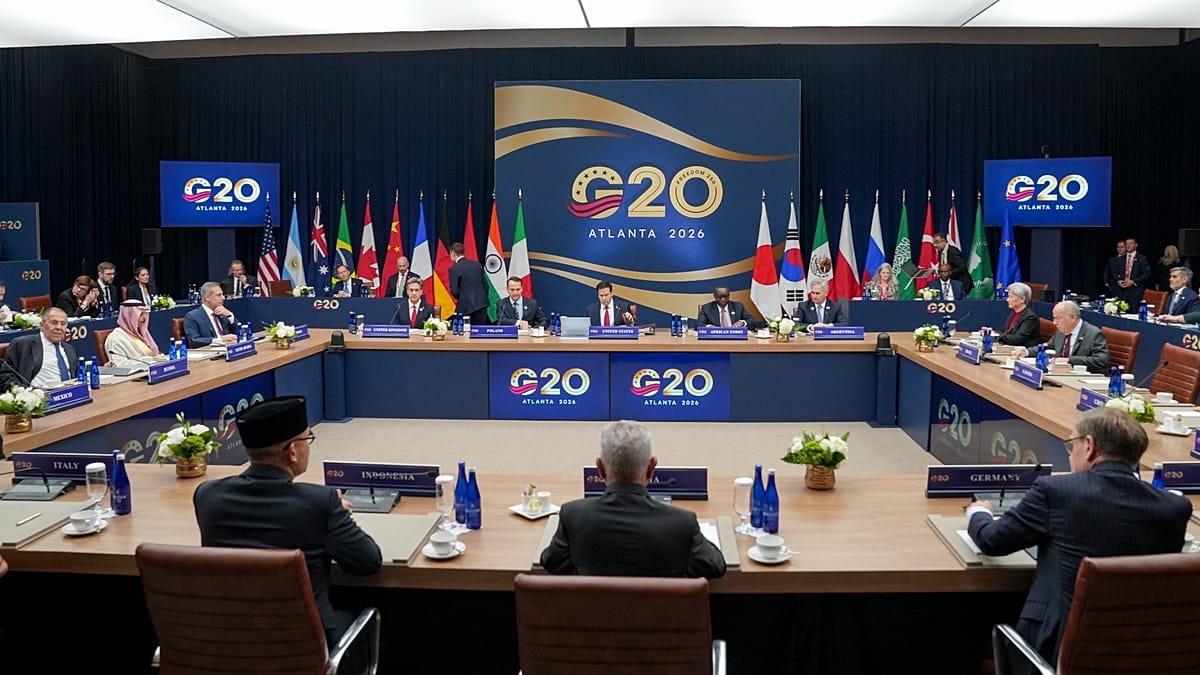
The United States on Friday called off a planned group photograph of foreign ministers from the G20, the group of the world's 20 largest economies. Several European diplomats had objected to being pictured with Russian Foreign Minister Sergey Lavrov and threatened to walk out of the meeting, which is taking place in Atlanta.
US Secretary of State Marco Rubio made the decision to drop the photo in order to avoid further controversy, according to two US officials who spoke anonymously because of the matter's sensitivity.
Rubio: a moment of choosing
Opening the talks, Rubio said he hoped for “a productive meeting.” He described the present as a “moment of choosing”, not only for the United States but for the world. In his words, countries face interconnected economic and geopolitical crises, many of which pose severe threats to the foundations of the global economic order.
European positions
The scrapped photo underlined divisions in the G20, where diplomats must tackle difficult negotiations over the war in Ukraine, the US-Israeli war against Iran, US tariffs and disputes in the South China Sea.
Poland's Deputy Prime Minister and Foreign Minister Radosław Sikorski told media in Atlanta that the cancellation was “the right decision” and that he was “not the only one” unwilling to be photographed with Lavrov. German Foreign Minister Johann Wadephul, quoted by the German news agency dpa, said there is “no normality with Russia”, but that disagreements must be aired at the table. He added that no falsely optimistic signals should be sent.
Earlier tensions
Before the photo dispute, several G20 members had already voiced concern over Russia's invitation, given intensified attacks on Ukraine. Tensions also rose after President Donald Trump waived new sanctions on Moscow and temporarily restricted logistical and intelligence support for Kyiv, further straining US-Ukraine relations.