Data centre boom becomes political trap for Republicans ahead of US midterms
Trump's enthusiastic backing of AI data centres is creating a political dilemma for Republican candidates, as voters across several swing states complain about rising electricity bills and strain on local infrastructure. The tension is intensifying ahead of the 2026 midterm elections.
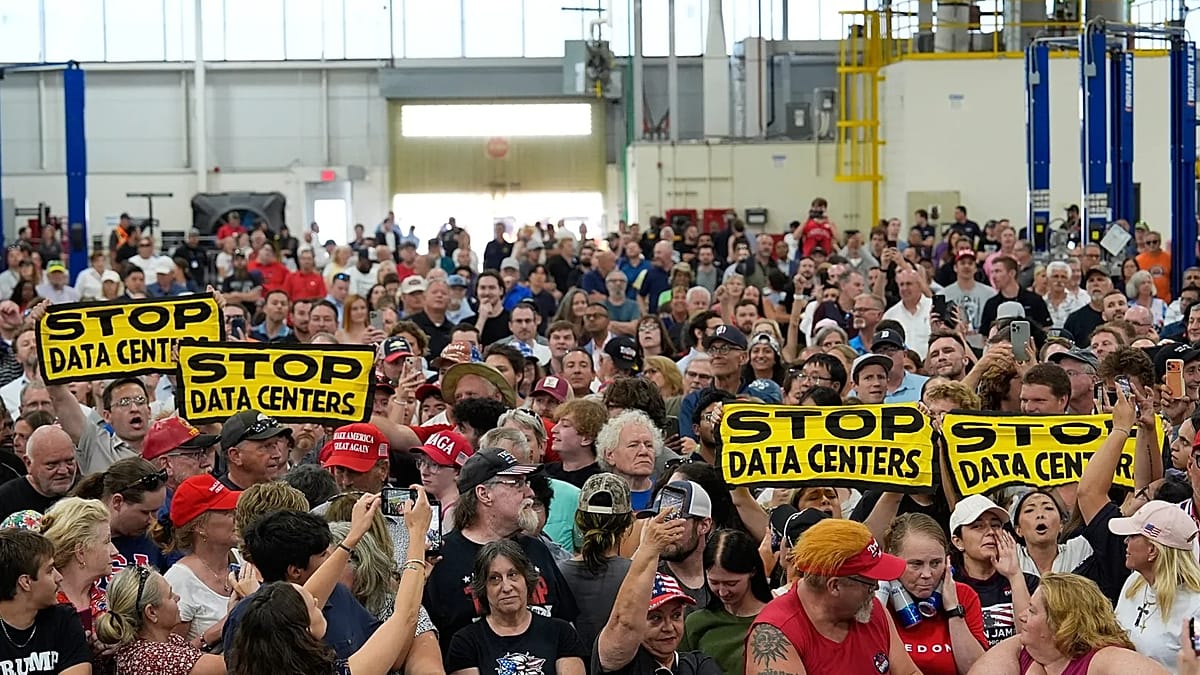
For years, Republicans have championed a simple tech policy: cut regulation and let businesses build. That formula is now colliding with reality as the enormous data centres powering the AI boom become a political flashpoint ahead of the 2026 midterms.
President Donald Trump has been a vocal defender of data centre expansion, citing jobs, investment and the need to outpace China in AI development. He has dismissed concerns about the facilities' massive electricity demands, pointing out that companies are building their own power plants. Yet residents in numerous states report worries about rising utility bills, strain on power grids, noise, pollution and loss of farmland.
Polling shows broad resistance
A Gallup survey found roughly seven in ten Americans oppose having a data centre built in their community, including a majority of Republicans — turning what was once a local zoning dispute into a national political issue.
The tension is especially visible in Ohio, where the National Republican Senatorial Committee has privately warned AI companies that public hostility toward data centres could jeopardize the party's hold on a key Senate seat. Democratic candidate Sherrod Brown has used the issue against Republican incumbent Jon Husted. In Michigan, Republican Senate candidate Mike Rogers recently announced support for a one-year moratorium on new data centre construction.
In March, the White House brokered a voluntary pledge among major AI companies not to shift costs onto households, but observers question whether that will be politically sufficient. Vulnerable Republicans are increasingly urging developers to cover their own power costs and secure local community consent rather than opposing data centres outright. Even Texas Governor Greg Abbott, once a strong booster of the industry, has grown more critical of developers.
Democrats are seizing the opening, framing themselves as defenders of ordinary consumers against unchecked corporate power — producing an unusual bipartisan backlash against an industry Trump considers central to America's technological future.