US dollar plunges against Brazilian real after first-round election result
The dollar fell more than 4% against Brazil's real on Monday after Senator Flávio Bolsonaro unexpectedly led the first round of the presidential election; the runoff is set for October 25.
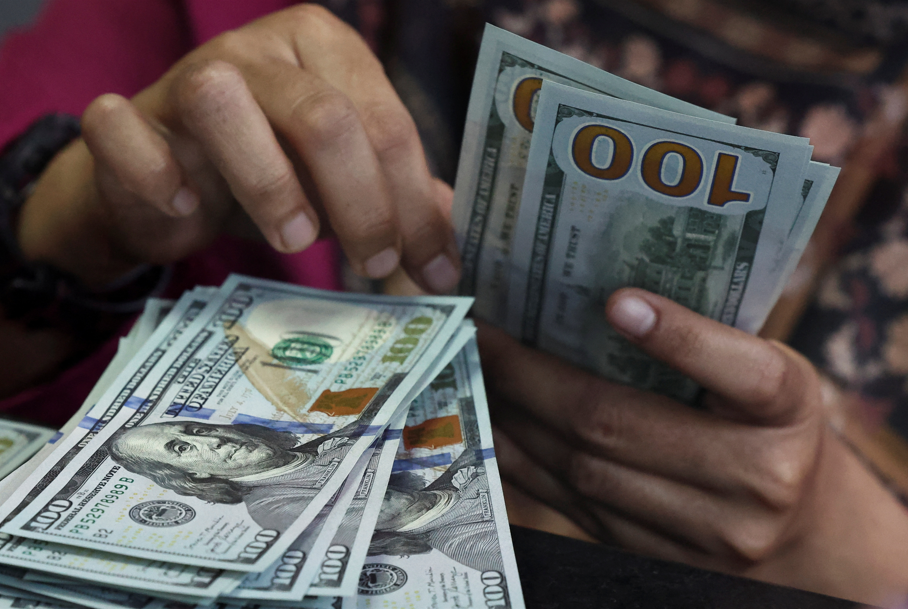
Dollar drops after the vote
On Monday, October 5, the US dollar fell sharply against Brazil's real. According to InfoMoney, at 9:09 a.m. the spot dollar was down 4.44% to R$4.985, while the most-traded November futures contract on the B3 exchange fell 4.38% to R$5.023. VEJA reported that around 10 a.m. the rate stood near R$4.98 — below the symbolically important R$5 mark — down from close to R$5.22 on the previous Friday. Investing.com cited Friday's closing rate at R$5.2173.
A surprise election outcome
The first round was led by Senator Flávio Bolsonaro (PL), contradicting most pre-election polls. According to InfoMoney and VEJA, Flávio received 47.03% of valid votes against 45.16% for incumbent President Luiz Inácio Lula da Silva (PT), a margin of roughly 2.2 million votes. CNN Brasil, citing the Superior Electoral Court (TSE) with 99% of ballots counted, reported different figures: Flávio with 47.21% (55.7 million votes) and Lula with 44.9% (53 million votes). The two will face each other in a runoff on October 25.
In his speech, Flávio said the result marked "the end of the PT era" and pledged that, if elected, he would forgo seeking re-election, saying one term would be enough to solve the country's problems. Lula, for his part, vowed to immediately launch a new campaign to overturn the result in the decisive second round.
Analysts' view
André Matos, CEO of MA7 Capital, said the drop should mainly be read as a repricing of the risk premium investors had been demanding, not a change in economic fundamentals — market forecasts for the year-end dollar rate had been stuck around R$5.20 for 16 weeks. He noted that gross public debt remains at 82.9% of GDP with a negative primary fiscal result. Avenue's chief strategist William Castro Alves added that uncertainty persists given the upcoming runoff and the fiscal challenges that will remain regardless of who wins, though he suggested the dip could be an opportunity for investors looking to increase international exposure.
Global market reaction
Investor optimism also showed up abroad — the US-listed EWZ fund, which tracks Brazilian equities, surged nearly 10% in after-hours trading on Sunday evening to $42, after closing Friday's regular session at $38.19 (already up 2.83%). Analysts at Eleven Financial Research, Suno Research, Manchester Investimentos and ASA expect a positive reaction in Brazil's Ibovespa stock index and falling interest rates, driven by expectations of greater fiscal discipline under the next government.