US imposes tariffs on about 60 trade partners over forced labour imports
The US is placing new tariffs of 10–12.5% on roughly 60 trading partners, including the UK, China and the EU, accusing them of insufficient action against forced labour. The duties take effect on Friday.
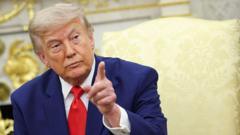
The United States will implement tariffs on approximately 60 trading partners, which together account for 99.4% of US imports, starting Friday. The duties are set at 10% for countries that have agreed to adopt and enforce a ban on imports made with forced labour, and 12.5% for those that have not. The US Trade Representative's office justified the move by stating that these partners failed to prohibit the importation of goods produced with forced labour.
President Donald Trump, who returned to office last year, continues his tariff-focused trade policy. Earlier this year, the Supreme Court ruled that many previous tariffs imposed under emergency powers were illegal. The administration is now using other legal avenues, specifically Section 301 of the Trade Act of 1974.
Trade Representative Jamieson Greer said in a statement that the action will "begin to correct what is both a human rights abuse and distortive trade practice." US officials emphasise that banning forced labour imports is a critical part of reciprocal trade agreements. So far, ten trading partners have agreed to implement such a ban.
Experts warn that the tariffs will raise costs for businesses and consumers, though exemptions for some goods may soften the impact. Wendy Cutler from the Asia Society Policy Institute noted that most partners will be disappointed and may seek to reduce their dependence on the US market.
Several countries have already reacted. Brazil called the tariffs "unjustified" and "arbitrary," vowing to respond under its reciprocity law. Japan expressed regret, while Australian Trade Minister Don Farrell labelled the duties "completely unjustified."
The US has previously imposed separate tariffs on Brazil, Canada, and China, and is currently investigating 16 countries over manufacturing overcapacity, which could lead to further duties.