Chemical accidents rise as Trump administration moves to weaken safety rules
New data shows chemical accidents are increasing, even as the Trump administration proposes rolling back safety regulations implemented under Biden.
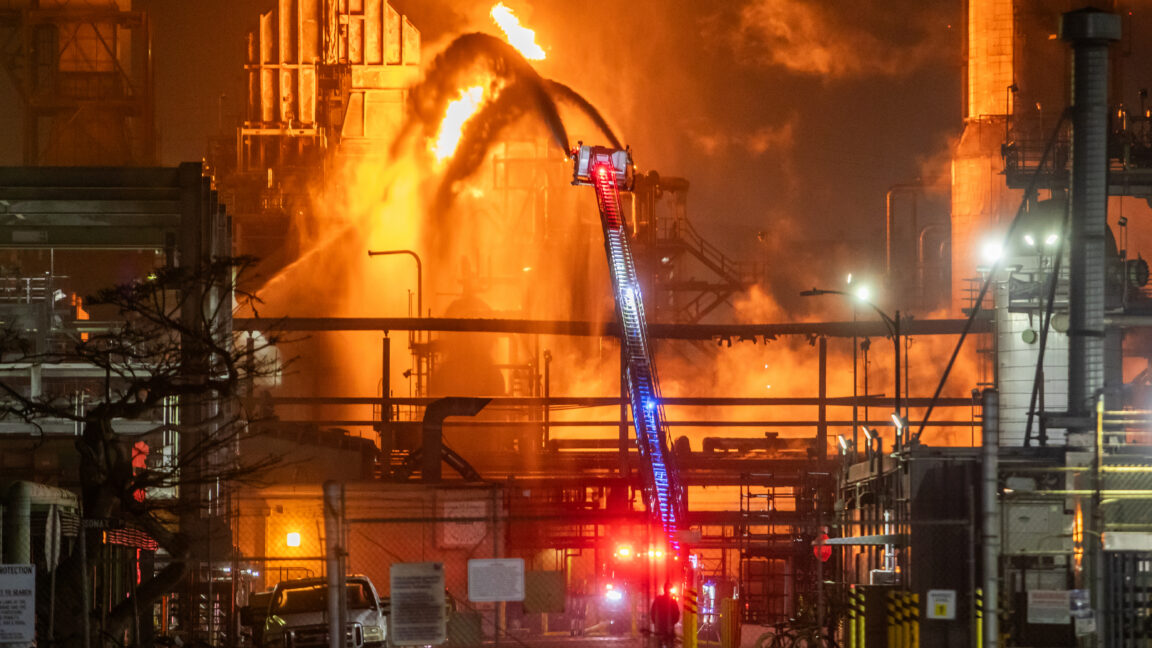
New statistics released by the organization PEER reveal a rise in chemical accidents in the United States. The data became public after a lawsuit compelled the Chemical Safety Board to disclose industrial chemical releases, as required by the Clean Air Act. In 2019, a federal judge ruled that communities have the right to know about hazardous chemicals released nearby. However, the Trump administration’s EPA removed a public data tool designed to inform communities of such risks last year. President Trump also attempted to eliminate the Chemical Safety Board by withholding funding, though Congress continued to fund the agency.
Earlier this year, the administration proposed significantly weakening the Risk Management Program (RMP) rules finalized in 2024, citing a need to reduce regulatory burden. The Biden administration’s strengthened RMP rules required measures such as safer-alternatives analyses, independent root-cause investigations, worker participation in accident prevention, and climate change adaptation preparations.
An EPA spokesperson stated that the agency is reviewing public comments and aims to complete the final rule in late 2026. According to the spokesperson, the proposal relies on an analysis of RMP reportable incidents from 2014 to 2023, which shows a significant decline in accidental releases over that period. This suggests that regulated facilities had effective prevention programs before the Biden-era rule. PEER’s Ruch countered that the Biden EPA used the same data and reached the opposite conclusion, adding that the claim of decline due to industry plans is an unsupported assumption.
Meanwhile, chemical accidents resulting in evacuations, injuries, or multiple casualties continue to occur at least once a week. “With each passing year the risk gets greater because the infrastructure continues to age,” Ruch said, noting that “the federal response to it is shrinking.”