US and Iran begin direct talks on peace deal in Switzerland
US and Iranian delegations started their first direct round of talks in Lucerne on Sunday, aiming for a final agreement within 60 days. The negotiations, which will continue through the night, focus on reopening the Strait of Hormuz, a ceasefire in southern Lebanon, and a nuclear deal.
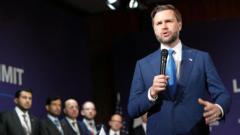
The first direct US-Iran talks since an expected agreement began in Lucerne, Switzerland, on Sunday, with a senior US diplomat saying they would continue through the night. The discussions aimed to "clarify some of the confusing messaging from Iran" regarding the reopening of the Strait of Hormuz, enforcing the ceasefire in southern Lebanon, and elements of a nuclear deal.
Earlier, US President Donald Trump threatened to attack Iran if it did not stop Hezbollah amid clashes with Israel in Lebanon. Iran dismissed the warning, saying it was prepared to fight. The US delegation is led by Vice President JD Vance, Jared Kushner, and special envoy Steve Witkoff, while Iran is represented by lead negotiator Mohammad Bagher Ghalibaf and Foreign Minister Abbas Araghchi.
A preliminary agreement reached last week includes a commitment to finalize a deal within 60 days, an end to fighting on "all fronts" including Lebanon, and the reopening of the Strait of Hormuz. The US agreed to lift a military blockade and all sanctions on Iran, as well as a $300 billion reconstruction plan. However, fighting between Hezbollah and Israeli forces in southern Lebanon has escalated since then, with Israeli airstrikes killing dozens of Lebanese civilians.
The US declared a new ceasefire between Israel and Hezbollah on Friday, but clashes continued. Iran announced it had closed the Strait of Hormuz on Saturday, though tracking data shows vessels still passing through; on Sunday afternoon, four tankers and several other ships were observed transiting the strait.
Israeli Prime Minister Benjamin Netanyahu insisted that Israeli forces would remain in southern Lebanon as long as needed to protect northern Israel, while Hezbollah leader Naim Qassem rejected any Israeli presence and vowed self-defense.
The talks also involved the prime ministers of Pakistan and Qatar, who acted as mediators. Qatar welcomed the continuation of talks. A US diplomat noted that the day's work would serve as a starting point for further technical discussions.