US and Iran pause strikes for third night as diplomacy given 'space'
The United States and Iran have observed a third consecutive night without strikes, as Washington gives diplomacy a chance. However, additional US military assets are moving into the region, and both sides remain on alert.
US ambassador to the UN Mike Waltz said President Donald Trump is 'giving diplomacy some space and time,' but added that 'additional military assets are moving into the region' and that 'the regime should believe the president when he says they're locked and loaded, and where all options are on the table.'
On Sunday, an Iranian army spokesperson announced that Tehran had also halted 'retaliatory operations' in the region. This follows 13 consecutive nights of US strikes on Iran, which the US military said aimed to 'degrade Iran's ability to threaten commercial shipping in the Strait of Hormuz.'
The Strait has been at the centre of tensions between Washington and Tehran and formed a key part of the 'memorandum of understanding' that the two sides agreed to in June. Under the terms of the provisional deal, Iran was required to reopen the waterway and reaffirm that it 'shall not procure or develop nuclear weapons.' For its part, the US said it would remove its naval blockade of Iran and drop sanctions. The agreement gave the two countries 60 days to work out a final deal.
But Iranian attacks on shipping in the Strait of Hormuz prompted fresh US strikes and a renewed naval blockade of Iranian ports, threatening peace efforts. US Central Command said that as of Saturday, its forces had 'redirected' 12 commercial vessels trying to bypass the blockade, 'disabled' two that did not comply, and boarded another two 'to ensure total compliance.'
In response to US military action, Tehran launched strikes on American military bases across the Middle East, targeting facilities in Kuwait, Bahrain, Jordan, the United Arab Emirates, and Qatar.
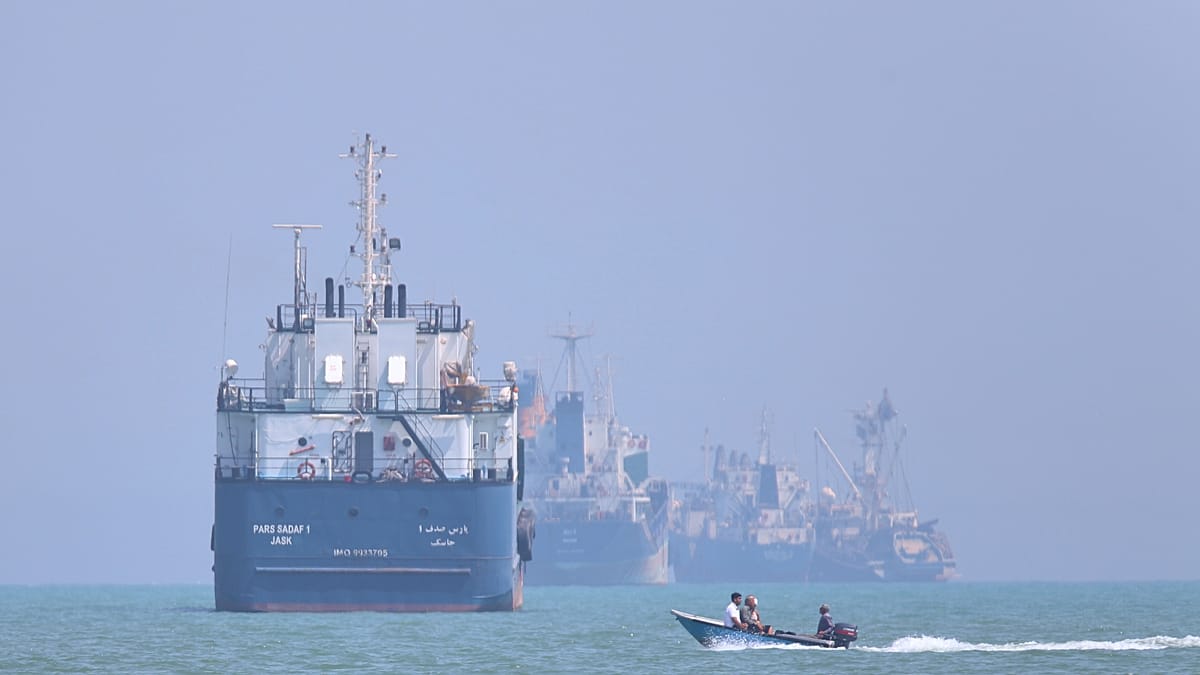
Additionally, Iran is locked in a diplomatic clash with Kyiv after a Ukrainian strike on an Iranian vessel in the Caspian Sea on Saturday. Ukraine said the vessel was being used to transport military cargo between Iran and Russia. Iranian Foreign Minister Seyed Abbas Araghchi said the strike killed a sailor and warned that it 'cannot go unanswered.' Ebrahim Azizi, head of the national security commission in the Iranian parliament, added that 'any attack on Iran always comes with a cost' and that 'Ukraine, too, may soon come to understand that Iran does not let actions go unanswered.'

