US winter forecast to be wetter and warmer, but not snowier, as El Niño strengthens
The US National Oceanic and Atmospheric Administration (NOAA) expects a wetter, warmer winter driven by a strong El Niño. Northern areas should see less snow than usual, while parts of the south may get more.
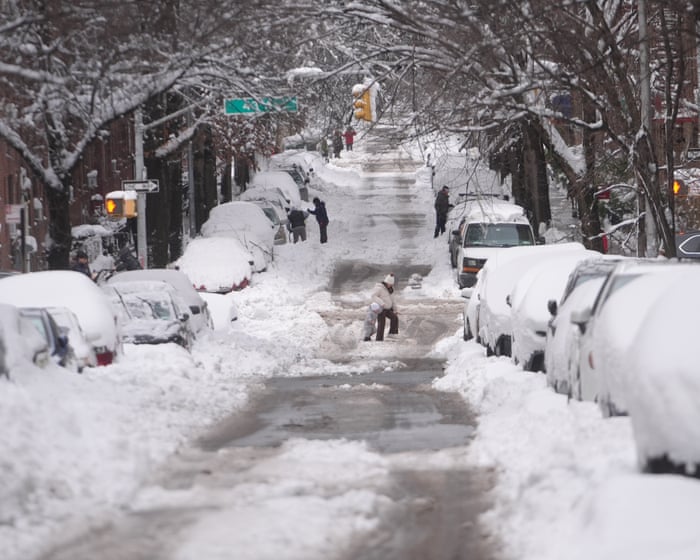
The United States is heading for a generally wetter and warmer winter, though not necessarily a snowier one, according to the federal government's seasonal outlook, presented on Thursday by the National Oceanic and Atmospheric Administration (NOAA), and to other meteorologists' forecasts. The main driver is El Niño, a natural but temporary warming of parts of the Pacific that typically heats the globe and shifts weather patterns.
El Niño's effects tend to follow predictable regional patterns, especially when the event is strong, as it is now. That gives forecasters more confidence about what lies ahead. NOAA notes that the US winter has warmed by about 4F (2.2C) over the past 50 years, mainly because of the human-caused climate crisis.
Snow
The National Weather Service does not issue seasonal snowfall predictions, but its meteorologists said much of the northern US – the north-east, the Great Lakes, the upper midwest and the northern Rockies – should expect below-normal snowfall. The southern Rockies and parts of the south-east and south-west may get more than usual. Private forecaster AccuWeather says Chicago, Boston, New York and Philadelphia may receive half or less of their normal winter snow, while Salt Lake City is the only large metro area where it expects above-normal amounts.
Temperature and precipitation
Some or all of 41 of the lower 48 states are forecast to be warmer than normal, and no state is expected to be cooler than average. Florida, Louisiana, Alabama and Mississippi should be near normal. NOAA forecasts a wetter winter in parts of 39 states, while much of Montana and parts of Oregon, Idaho, Wisconsin and Michigan are expected to be drier. NWS meteorologist Jon Gottschalck said drought conditions in the west should improve or end. Mike Bettes of the Weather Channel said California could face high-impact atmospheric rivers bringing flooding and landslides.
Uncertainty
Forecasters expect the current El Niño to reach record levels this fall or winter. MIT research scientist Judah Cohen said such an unprecedented event makes him less, not more, confident in forecasting.

