Transit of Russia's "blood grain" through Latvia surges in August
Russia is increasingly rerouting its grain exports away from the threatened Black and Azov Seas toward the Baltic Sea, causing a marked rise in Russian grain cargo transiting Latvia in August. Analysts warn volumes could return to early-war levels in September and October.
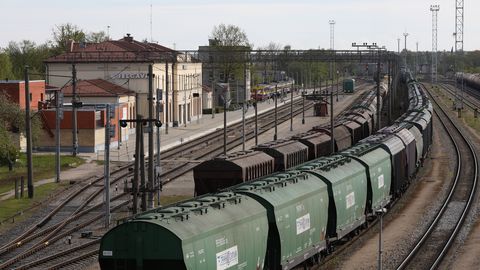
Transit volumes of Russian-origin grain through Latvia have risen sharply during this year's harvest and export season, according to information gathered by the TV3 program "Nekā Personīga."
The shift is attributed to the security threat in the Black and Azov Seas, which is pushing Russia to seek alternative export routes for its grain harvest. As a result, a large share of Russian grain exports is being redirected toward Baltic Sea ports, using rail and port infrastructure in Latvia along the way.
Rise in August
In August, the volume of such cargo passing through Latvia was already notably higher than before. Observers say this trend is expected to continue and intensify in the autumn months, when harvest and export activity traditionally peaks.
Autumn outlook
During the peak months of September and October, the volume of Russian grain transported through Latvian territory could return to levels seen in the early years of the war following Russia's full-scale invasion of Ukraine. This grain has been referred to in media and public discourse as "blood grain," underscoring its connection to Russia's ongoing military campaign.
The situation was examined by the TV3 program "Nekā Personīga," which focused on the rerouting of Russian export flows and its impact on the use of regional infrastructure.
/nginx/o/2026/09/06/17902023t1h4d6f.jpg)
/nginx/o/2026/08/07/17832676t1h0a64.jpg)
