Almost all NSW homes lost in black summer bushfires stood within 100 metres of flammable vegetation
New research finds that 94% of homes destroyed in New South Wales during the 2019–2020 bushfires were less than 100 metres from flammable vegetation. The authors warn that global heating may eventually make that distance insufficient.
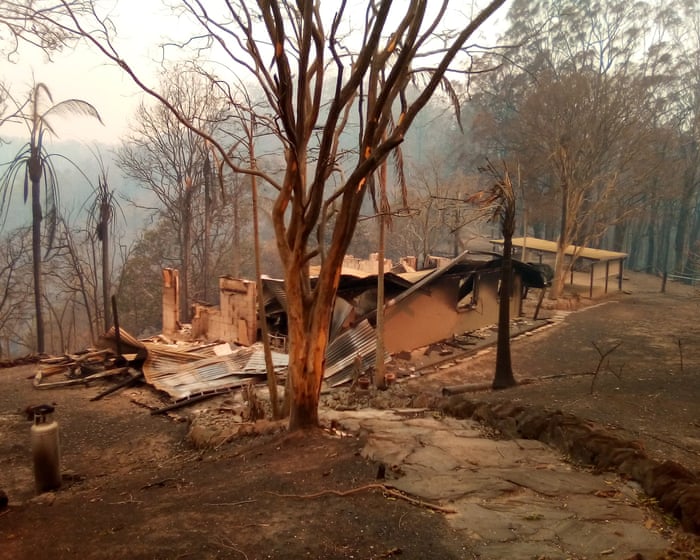
In the Australian state of New South Wales, 94% of homes destroyed in the devastating 2019 and 2020 bushfires, known as the "black summer", stood less than 100 metres from flammable vegetation such as trees. The finding comes from a study published in the International Journal of Wildland Fire. It supports the risk maps that authorities use, but the researchers caution that if climate change keeps worsening fire conditions, the recommended distances between homes and vegetation may have to be increased.
What the research examined
The 100 metre buffer underpins the widely used maps of bushfire prone land. Firefighters use them to plan community outreach, and planning authorities use them to decide how fire-resistant new homes and renovations must be. In NSW, 2,475 homes were lost. Across Australia, more than 3,000 homes were destroyed, 33 people died, and almost 3 billion native animals were killed or displaced.
Associate professor Owen Price, a bushfire risk expert at the University of Wollongong who led the study, said the 100 metre rule was "pretty good". However, the team also looked at fire danger ratings on the days homes were lost. When conditions reached extreme or catastrophic levels, houses further than 100 metres away were also burning. Price called this a warning sign, because the index is expected to worsen with global heating. The study also notes that current regulation may become less useful over time.
Response from the fire service
Melissa O'Halloran, who works on bushfire planning at the NSW rural fire service, said homes in bushfire prone areas should be built to a higher construction standard. She said conditions in 2019 were extreme and beyond what is usually planned for, yet the policy had held up fairly well. The service is reviewing its main bushfire protection policy to take account of rising climate risk.
Inspector James Morris of the service said fire risk is already elevated this year in northern parts of the state, the central west and the far south coast, where heavy rain has been followed by fuels that can dry out quickly. He said the state could be in for a challenging fire season.