Unusually large storm system hits eastern Australia, with more expected Monday
Australia's Bureau of Meteorology issued severe thunderstorm warnings across several eastern states on Sunday. Eight flood warnings are in force in southern Queensland after days of heavy rain.
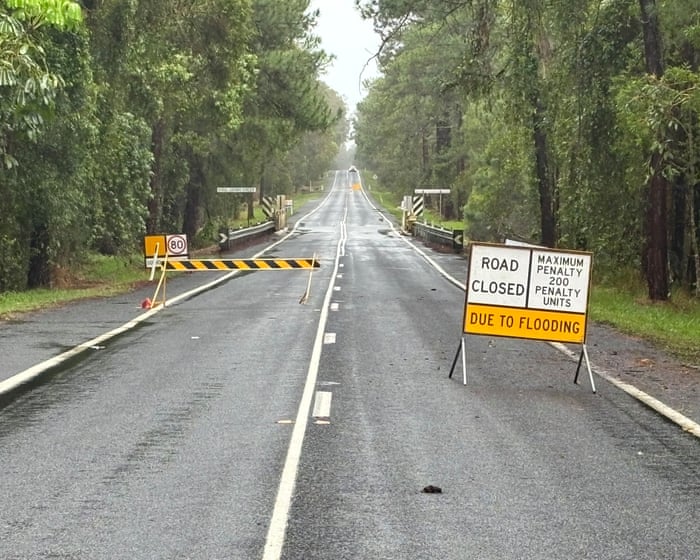
Australia's Bureau of Meteorology warned on Sunday, 25 October, of severe thunderstorms across a large part of the country's east. The alerts cover southern Queensland, western New South Wales, the Australian Capital Territory (ACT) and eastern Victoria. The bureau said the storms could bring hail, damaging winds, flash flooding and power outages, and that further storms and flood risk are expected on Monday.
Storm band crosses several states
Bureau meteorologist David Crock said this was a multi-state storm system and that it was unusually large. A broad line of storms had already swept through western New South Wales, where gusts of up to 100 km/h were recorded in the central west around midday. A front of cooler air was moving in from the west, drawing in tropical moisture from the north and bringing storm conditions to central NSW and Canberra.
Crock explained that a high-pressure area had sat over the Tasman Sea for about 10 days, blocking weather fronts and bringing rain and storms to southern Queensland. When a strong enough system arrives, it pushes that blocking pattern away, which typically brings severe weather.
Flooding in southern Queensland
Eight flood warnings are in place across southern Queensland after days of torrential rain. The Mary River downstream of Gympie was forecast to reach major flood levels at Tiaro on Sunday evening and into Monday. After a very dry September, October rainfall in the state's south has been multiple times the monthly average, and the Sunshine Coast area received 200–400 mm over the past week.
Crock described Monday as the last big bang of the system, which he said would be a great relief for people in south-east Queensland.
Longer-term outlook
The bureau's long-range forecast for November to January suggests above-average rainfall over most of the country, except the far north and much of Tasmania. November is likely to be warmer than usual in the southern half of the continent. Bureau data shows Australia has warmed by about 1.5C since 1910.

