Snow falls in south-east Australia in November as cold air mass sweeps through region
An unseasonal cold air mass has brought snow to alpine areas of New South Wales, Victoria and Tasmania in Australia's spring. It may be one of the last cold snaps of the year, as forecasters warn of a strong El Niño.
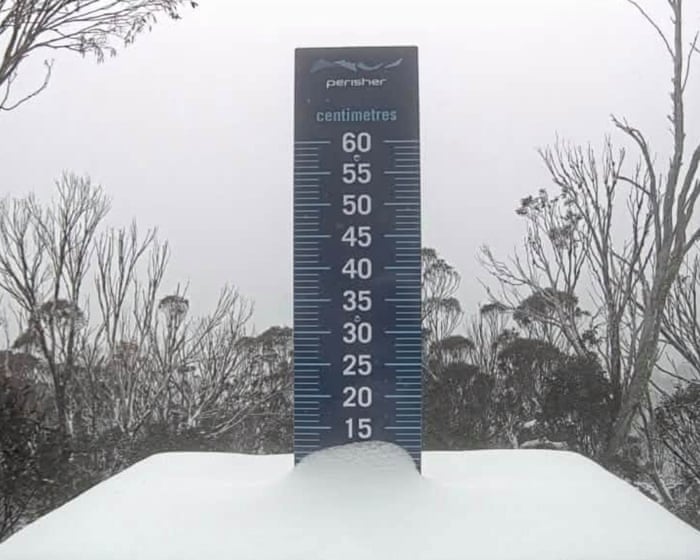
Snow fell across parts of New South Wales, Victoria and Tasmania in Australia's south-east on Saturday and Sunday, 8 November, as an unseasonally cold air mass moved through the region. November falls in spring in the southern hemisphere, which left many residents surprised.
Snow was recorded at the ski resorts of Thredbo, Perisher and Mount Hotham, and on Kunanyi/Mount Wellington near Hobart, the Tasmanian capital. The Bureau of Meteorology (BoM), the national weather agency, had forecast the snow. Although uncommon, it is not unprecedented: many of the places that saw snow over the past 24 hours also had falls in November 2022.
What caused the chill
The bureau said a weather system carrying cold air north from the direction of Antarctica was responsible. South-westerly winds made it feel colder than the actual air temperature. At midday, Adelaide, Melbourne, Hobart, Canberra and Sydney all had temperatures that felt cooler than 13C. Adelaide reached 17.5C but felt like 12.3C, while Canberra's 12.9C felt like 5.3C. Brisbane, Perth and Darwin, by contrast, had temperatures in the 20s or 30s.
Madeleine McVie, a retail manager at Thredbo, said on Instagram that it was not just a light dusting but heavy snowfall. In Tasmania, the Kingston Crows cricket club posted a photo of Kingston Beach Oval covered in hailstones.
What comes next
Warmer weather is forecast for Monday, and every capital city is expected to reach at least 20C by Tuesday. This may be one of the last cold snaps of the year: the BoM, the UN and other bodies have warned of a likely very strong El Niño, a climate pattern that alters weather worldwide and has already begun to affect regions across the planet. The southern hemisphere summer is predicted to be hotter and drier, raising the risk of wildfires and drought in Australia and southern Africa.