Australia's decades-long offshore migrant scheme offers cautionary lessons as EU, US pursue similar deals
Australia's more than two-decade practice of processing asylum seekers offshore has cost billions and drawn human rights accusations, as the EU weighs similar arrangements and the US already runs its own third-country deportation scheme.
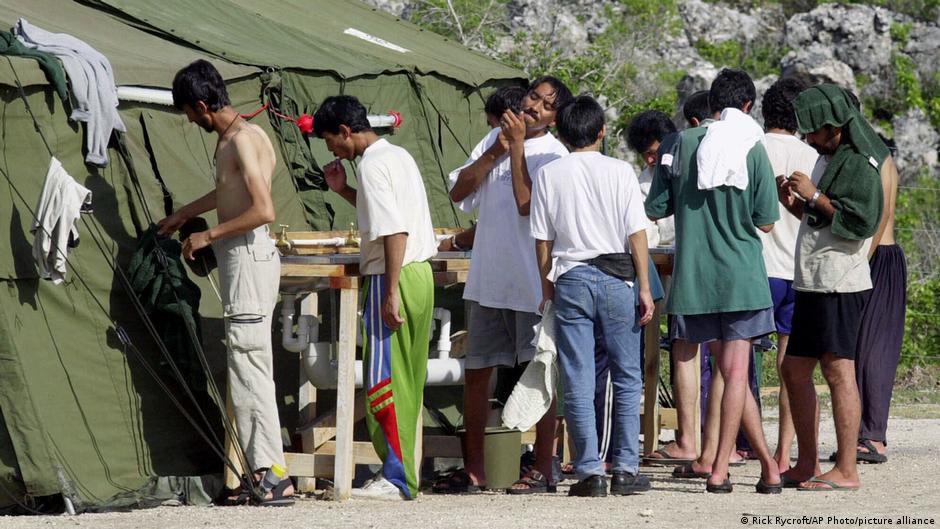
Countries that send asylum seekers to third nations for processing or detention risk spending billions while facing accusations of human rights abuse and financial mismanagement, as Australia's nearly 25-year experience shows. The European Union is now considering similar measures, while the United States has already put such a scheme into practice.
Australia's 'Pacific Solution'
In 2001, then-Prime Minister John Howard launched a policy sending boat arrivals to processing centers in Papua New Guinea and Nauru, framed as a deterrent against dangerous sea journeys. A Labor government phased it out in 2008, calling it costly and ineffective, but in 2012, after a rise in deaths at sea, Prime Minister Julia Gillard reopened the centers on expert advice. Transfers peaked at more than 3,000 people between 2013 and 2014. Journalists were largely denied access to the facilities, which, according to Graham Thom of the Refugee Council of Australia, allowed much of the public to accept claims that the policy was working.
EU and US plans
The EU is considering 'return hubs' outside its borders as early as 2027, with Rwanda, Uzbekistan and Uganda reportedly among potential partner countries; the European Parliament approved related rules in June. Denmark, together with Germany, Austria, Greece and the Netherlands, announced in September steps toward an agreement with an unnamed non-EU country. The US has already struck deals with at least 30 countries in Africa and Latin America, and its Supreme Court last month allowed the resumption of deportations under this model.
Allegations and costs
In Australia, former detainees on Manus Island won a 70 million Australian dollar settlement in 2017 over abuse claims. A Senate inquiry in February heard testimony about neglect and untreated health conditions, with particular concern for women held on Nauru. More than 70 UN member states have raised concerns about Australia's approach. Since 2012, Australia has spent over 13 billion Australian dollars on offshore detention, and has recently agreed to pay Nauru an additional 2.5 billion dollars over 30 years to accept convicted foreign nationals it cannot deport to their countries of origin.


