Ceasefire verification mission deployed to eastern DR Congo amid mutual accusations
A mission tasked with monitoring compliance with a fragile ceasefire between Congolese forces and the Rwanda-backed AFC/M23 group was deployed to eastern DR Congo on Monday. Both sides simultaneously accused each other of fresh attacks and rights abuses.
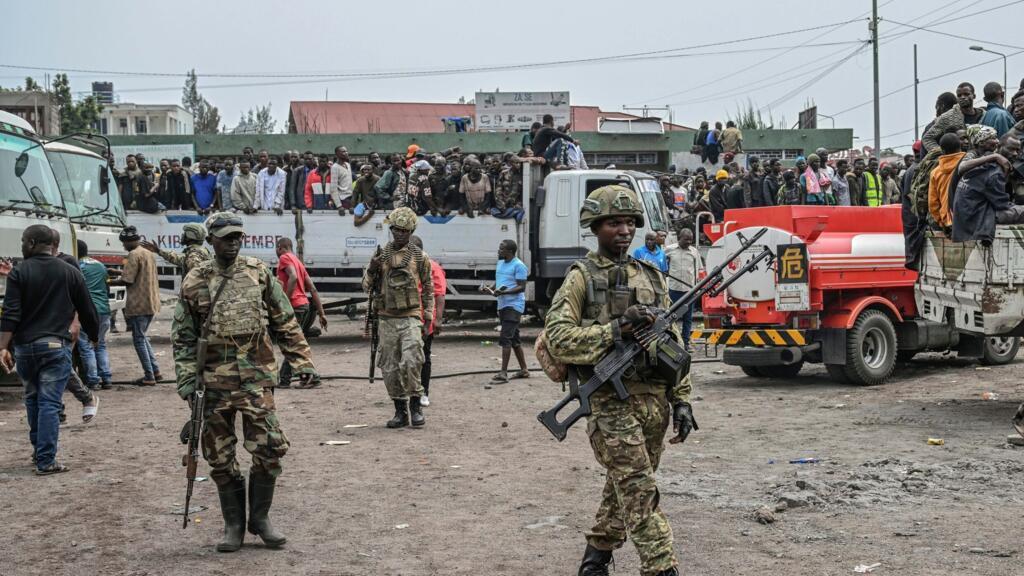
Eastern Democratic Republic of Congo remains gripped by long-running conflict among numerous armed groups competing for control of the region's mineral wealth. Among them, the AFC/M23 group expanded its hold over significant territory last year.
Mediation led by Qatar and the United States last year produced two separate agreements: a July 2025 commitment toward a ceasefire signed by the Congolese government and AFC/M23 in Doha, and a US-brokered peace deal formally signed by the DRC and Rwanda in Washington in December. Despite these accords, fighting on the ground has not stopped.
On Sunday, Switzerland's government said the DRC and AFC/M23 had reached agreement on a roadmap for further peace negotiations following talks held in Switzerland. It also announced the deployment of a regional mechanism to verify ceasefire violations, made up of representatives from the Congolese government and AFC/M23 alongside observers from member states of the International Conference on the Great Lakes Region (ICGLR).
On Monday, UN helicopters carried the mission — the first of its kind — to Minembwe, a locality in South Kivu province that has recently seen heavy clashes. The mission is also expected to visit the lakeside town of Uvira, which AFC/M23 forces left in January, and the Kalehe area, where fighting has been reported in recent weeks. Neither Congolese nor AFC/M23 authorities have publicly responded to the mission's deployment.
Accusations on both sides
Closed-door talks held from August 17 to 21 involved representatives from the United States, Qatar, Switzerland, the African Union Commission, and Togo, which is serving as the AU's mediator. The two sides agreed on a standardised approach to reporting alleged ceasefire violations and on setting up a mechanism to track progress on commitments under the Doha framework.
On Monday, the DRC issued a statement condemning what it called crimes and serious rights violations by M23 in areas under its control, alleging the group killed more than 300 people in June and July. An AFC/M23 spokesperson, in turn, accused government forces on social media of carrying out a deadly artillery attack on a village near Minembwe. Such mutual accusations are common but often impossible for independent observers to verify, given how difficult access to the Minembwe area has become. NGOs and UN experts have also reported that AFC/M23 has suppressed dissent, including targeting journalists and human rights activists in territory it controls.