Families of Missing Azerbaijanis Seek EU Support in Brussels
Relatives of Azerbaijanis missing since the first Karabakh war held demonstrations in Brussels this week outside the European Parliament and European Commission. They want EU institutions to press Armenia to disclose archive data and mass grave locations.
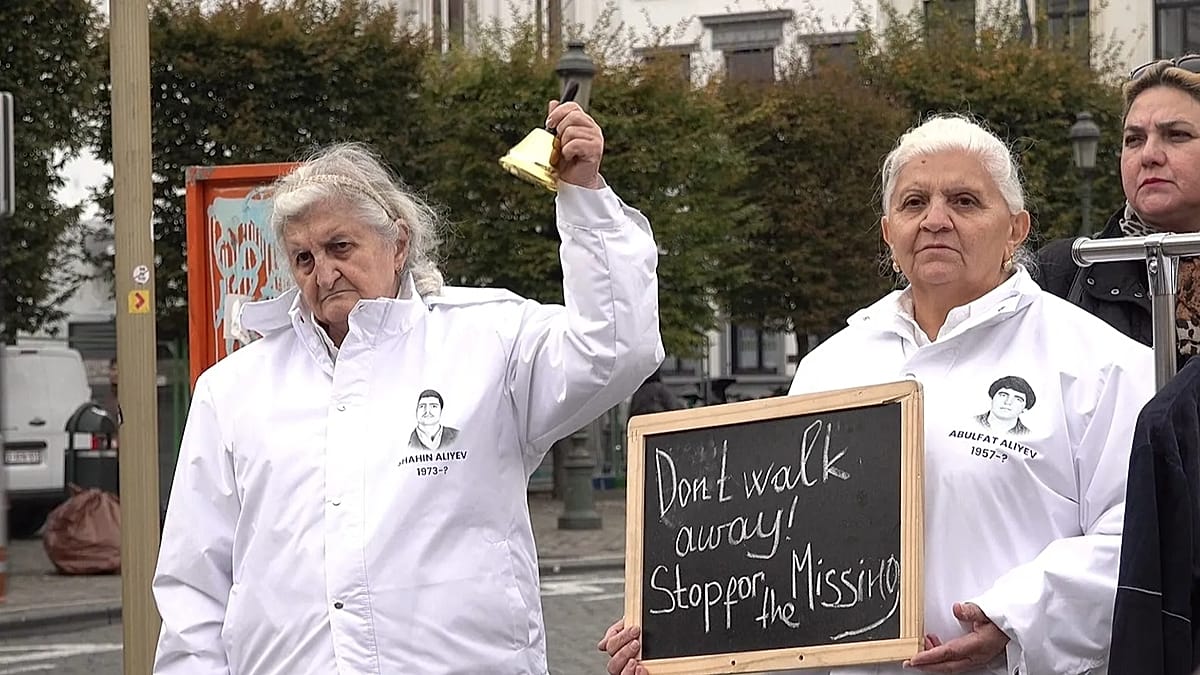
Families of Azerbaijanis who went missing during the first Karabakh war held demonstrations in Brussels this week outside the European Parliament and the European Commission headquarters. They asked EU institutions for support in establishing the fate of more than 4,000 people. The war, fought between Azerbaijan and Armenia over the Karabakh region, ended in 1994.
The protest was organised by the Garabagh Missing Families Public Union, an association of relatives of the missing. It says the missing include children, women and elderly people. The families urge the EU to press Armenia to disclose archive information and the locations of mass graves. They argue that their right to know the truth after 30 years deserves international attention. The union says it has received no international recognition or aid. According to the families, Armenia has shared no information about the missing, but they hope the peace process between the two countries can help clarify their relatives' fate.
White jackets with a question mark
Participants wore white jackets showing a picture of their loved one, their date of birth and a question mark, symbolising an unknown fate. Personal items of the missing, including passports, photos and clothes, were also displayed.
Farida Jabbarova said her husband Azad Jabbarov went missing in Khojaly and that for 34 years nothing has been known about him. She said the aim is to find burial sites, recover remains and be able to bury them in a cemetery where relatives can visit.
Figures and obstacles
Konul Behbudova, head of the union, said 328 missing persons have been identified through DNA examinations and the remains of 273 victims have been handed to families, while the fate of thousands remains unknown. 32 mass graves have recently been discovered in Karabakh. Searches are hampered because the territories are contaminated with mines and unexploded ordnance.
The issue of the missing is now part of the wider peace and reconciliation process between Armenia and Azerbaijan. Armenia, for its part, says hundreds of Armenians are also missing after the Karabakh wars and has also sought answers about their fate.