‘The fear keeps building’: Nizhnekamsk residents on life after a deadly Ukrainian drone attack
A Ukrainian drone attack on Nizhnekamsk on August 10 killed 13 people and wounded 78, damaging residential buildings and a hostel. Residents describe growing anxiety, while authorities canceled the city’s anniversary celebrations.
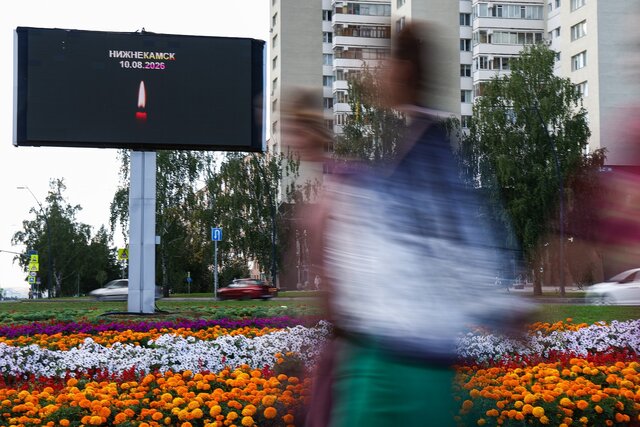
On August 10, a Ukrainian drone attack on Nizhnekamsk, a city in Russia’s Tatarstan, killed 13 people and injured 78. Among the dead were citizens of Uzbekistan and Tajikistan and a 5-year-old girl who was sleeping on a balcony of an apartment building on Shkolny Boulevard; a drone hit a tree and exploded, shattering a window. Ukraine’s General Staff said the intended targets were two local oil refineries, but drones also struck residential buildings and a hostel in the industrial zone. The apartment building on Shkolny Boulevard suffered the most damage, with windows blown out in 60 of its 132 apartments. Ninety-three residents asked the city administration for temporary housing, and 25 of the wounded were hospitalized.
Residents told the independent journalist cooperative Bereg about the emotional aftermath. A 53-year-old lawyer, identified only as Ruslan, said he was among the first to reach the damaged building and stood there crying. “I’m an adult man, I’ve seen a lot, but I couldn’t hold back here,” he said. A makeshift memorial appeared outside the city museum on August 10, where people brought flowers, candles, icons, and children’s toys until evening. He described the city as close-knit and said he worried most about the children.
Other residents spoke of the cumulative psychological toll. Olga, who works on art projects with a large local company, said the attacks had mostly disrupted her schedule: airport closures and rescheduled flights forced her to cancel meetings, and many cafes closed during business trips. Still, she said, there was no noticeable panic. Alina, a 44-year-old lifelong resident, said she often heard drones at night, usually around 4 a.m., and that these nights had become harder and harder to bear. After the August 10 attack, her anxiety grew and she decided to see a doctor. She said she fears for her children and wants to leave the city, possibly to a rural settlement where her family has land. She also described a debate among parents about holding school assemblies on September 1; she plans to keep her children home.
Seven of the 13 dead were citizens of Uzbekistan, and two were Tajikistani nationals. Their names were never published. According to media reports, they were eating breakfast in a cafeteria when the strike hit. Tatarstan’s leader Rustam Minnikhanov acknowledged after visiting a hostel that “these people should have been in shelters, but they weren’t.” Authorities later said the bodies had been sent to Uzbekistan and Tajikistan.
Residents also petitioned to cancel the city’s 60th anniversary celebration, scheduled for August 15, with some saying the money would be better spent on defending the city. Tatarstan authorities declared a period of mourning and canceled City Day, which Mayor Radmir Belyaev said would be postponed indefinitely and might be held in a different format. Ruslan, the lawyer, wants a permanent memorial on Shkolny Boulevard to honor those killed, and he believes most residents would support the idea.
/nginx/o/2026/09/29/17944391t1h9d15.jpg)
/nginx/o/2024/07/02/16195652t1h1053.jpg)