BBC beats ITV again in World Cup final viewership
BBC attracted an average of 9.7 million viewers for the World Cup final, four times more than ITV's 2.4 million. The broadcaster's decision to stay in the UK for most of the tournament remains debated, but BBC Sport highlights innovative digital engagement.
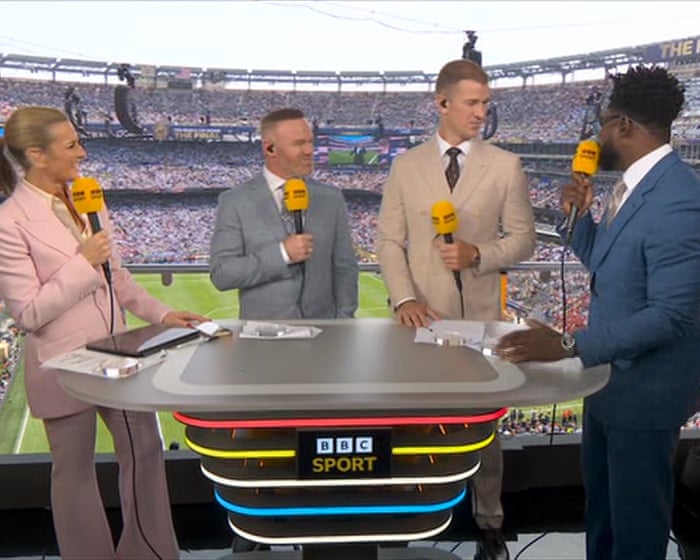
In the World Cup final where Spain defeated a determined Argentina, the BBC once again outperformed ITV in viewership. According to Digital i agency data, the BBC averaged 9.7 million viewers, while ITV had 2.4 million. The BBC's main coverage, hosted by Gabby Logan with pundits Alan Shearer, Micah Richards, Joe Hart, and Wayne Rooney, peaked at 13.6 million. Guy Mowbray handled commentary.
ITV's broadcast, fronted by Mark Pougatch and featuring Gary Neville, Ian Wright, and Roy Keane, peaked at 3.4 million viewers. Sam Matterface commented alongside expert summariser Lee Dixon. These figures show ITV has not narrowed the gap since the previous final in Qatar four years ago, when BBC averaged 9.2 million and ITV 2.8 million.
The BBC's decision not to set up a studio in the US until the very late stages and to use a new set in Salford drew criticism compared to ITV's Brooklyn studio. However, most in the television industry believe the absence of adverts gives the BBC a significant advantage. ITV was praised for bringing in Neville and Keane, leveraging their popular podcast "Stick to Football" to attract viewers.
The BBC's choice to skip US coverage remains contentious. One senior sports broadcasting figure commented: "You have to show up for the World Cup." This dilemma will not arise for Euro 2028, hosted in the UK and Ireland.
These viewing figures come amid major budget cuts at the BBC, with more reductions planned for BBC Sport later this year. Part of the reason for basing most coverage in the new Salford studio was to repurpose it for "Match of the Day".
All broadcasters are adapting to shifting consumption habits as audiences turn to phones and digital platforms for football content. The BBC's new football YouTube channel generated 100 million views. Across social media, BBC clips, interviews, and analysis attracted 2.55 billion views.
Alex Kay-Jelski, director of BBC Sport, said: "Our ambition was to be there for audiences every step of the way, not just during the matches, but every hour in between. We wanted to tell the stories behind the tournament, bring fans closer to the biggest moments and innovate in ways that made the experience richer than ever before. The response has been extraordinary."
/nginx/o/2026/09/29/17945294t1h42c5.jpg)
/nginx/o/2026/10/02/17951980t1h30f6.jpg)