The night Belfast burned: inside Northern Ireland's third summer of race riots
After a brutal stabbing in Belfast involving a suspect later identified as Sudanese, organised mobs attacked immigrant families' homes, torching houses, cars and a bus, in what marked the third consecutive summer of racial unrest in Northern Ireland.
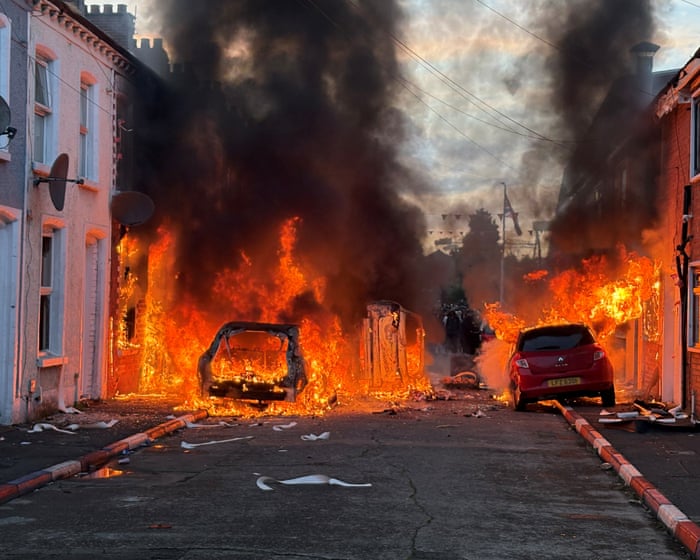
On the evening of 8 June, a man was filmed repeatedly stabbing another man on a Belfast street until bystanders intervened. Footage spread rapidly online, with many commentators focusing on the fact the attacker was Black and the victim white. Police held a suspect initially linked to Somalia, later corrected to Sudan.
By the next morning, messages circulating online called on businesses to close and urged men to gather at 25 locations across Northern Ireland that evening, wearing dark clothing and ready for confrontation. Organisers instructed participants to leave phones at home and disable dashcams and doorbell cameras, applying lessons learned from previous riots to avoid identification and arrest.
Attacks and evacuations
That evening, crowds gathered in loyalist areas of Belfast and marched to the homes of foreign families, including a Romanian household whose windows had already been broken twice before. Bricks and fireworks were thrown, cars set alight, and doors broken down. Similar violence erupted elsewhere in the city, forcing Ukrainian, Romanian, Polish and Sudanese families to flee their homes; a public transport bus was also set on fire. In some areas police were absent or held back, leaving community volunteers to escort threatened families to safety.
A recurring pattern
Observers say the unrest was not a surprise but an escalation of a pattern seen in the 2024 Belfast riots and the 2025 disturbances in Ballymena. Analysts point to the involvement of loyalist paramilitary factions, including remnants of the UVF and UDA, some of which reportedly paid teenagers to join the rioting. Experts describe the violence as loyalism seeking a new target for its ideology as the threat once posed by the IRA has faded, with online groups methodically stoking anti-migrant sentiment in the months before the riot, priming communities for a triggering incident.

