Ex-SpaceX engineers launch robotic factory to automate steel part production
Three former SpaceX engineers have founded 1872, a startup using AI software and robots to automate steel skid manufacturing. The company opened its first Cincinnati factory and aims for large-scale automation by 2027.
Three former SpaceX engineers — Dan Summers, Brian Mongilio, and Michael Grant — who previously worked on building Raptor rocket engines have founded a new startup called 1872, aiming to automate the production of steel components using AI software and robotics.
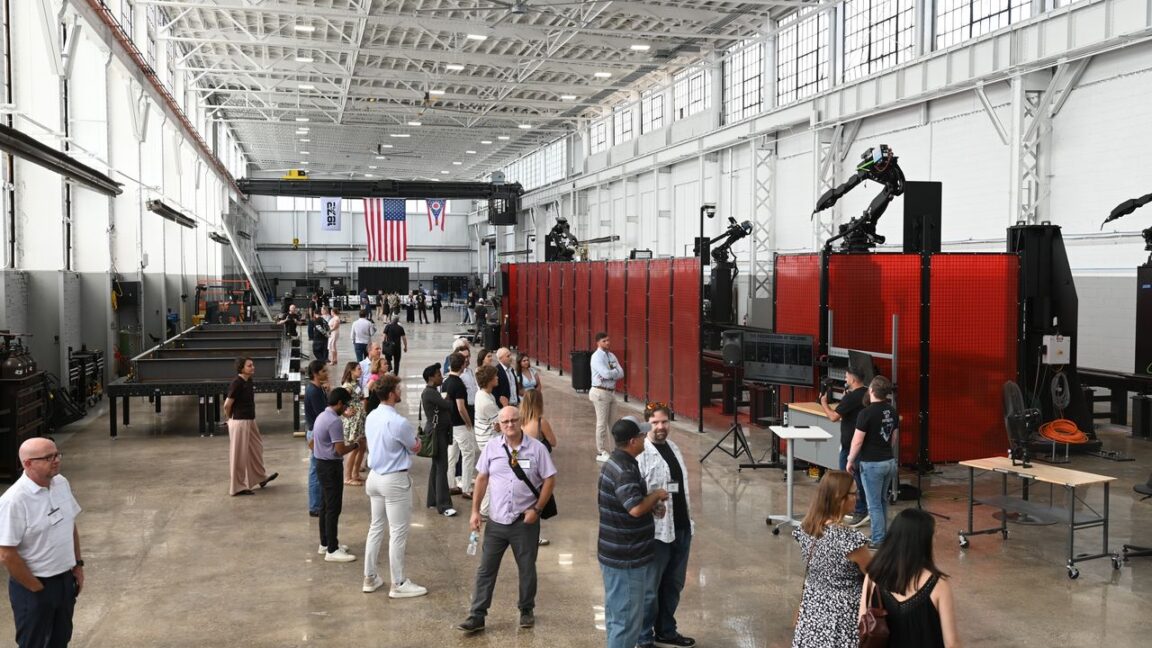
The company held a ribbon-cutting ceremony for its first facility, Factory One, in Cincinnati, Ohio, on July 22. Rather than aerospace hardware, 1872 is starting with steel skids — rectangular frames that serve as movable foundations for modular buildings, including AI data centers and small modular nuclear reactors. The goal is to build a prototype factory capable of automating most of the fabrication process by 2027.
Why automate
Summers said the company isn't chasing full autonomy for its own sake; it might settle around 80 percent automation if pushing further yields diminishing returns. The main driver is a shrinking skilled labor pool. The American Welding Society projects the US will need 320,500 new welders by 2029 due to an aging workforce and rising demand, a problem compounded by tighter immigration restrictions affecting welding-intensive industries.
Robotic welding
1872 has partnered with Columbus-based Path Robotics for automated arc welding. Path Robotics says its robots achieve 95 to 100 percent first-pass yield and keep their arc active 70 percent of working time, compared to just 10 to 12 percent for human welders, who spend more time repositioning parts. This reportedly cuts welding costs by 85 percent, from about $0.78 to $0.12 per weld inch.
While welding a single skid takes only two to four hours, assembling the cut components beforehand takes four to five days — a bottleneck the company is focused on shortening.
AI-driven planning
1872's software vision includes an "Architect" system that converts customer design files into a full manufacturing plan, covering pricing and sourcing, and a "Conductor" system that orchestrates robots and material movement on the factory floor. The company uses customized off-the-shelf AI models, including large language models, and plans to add physics-based models.
1872 has raised $15 million in seed funding from The O.H.I.O. Fund to launch Factory One and build out its technology stack. It may eventually expand automation beyond skids to structural frames and enclosures.