European-made pesticides named in 1,605 poisoning reports in Brazil last year
An investigation found that pesticides sold by European chemical companies were named in more than 1,600 poisoning reports in Brazil last year. About a third of the cases involved chemicals banned on EU farms.
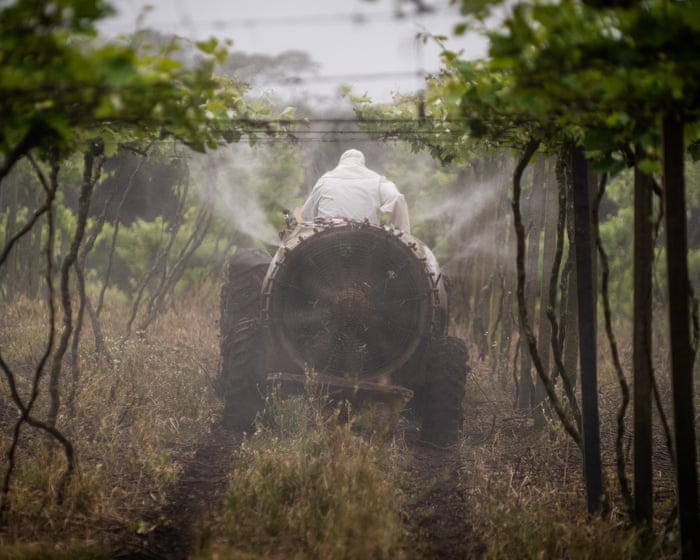
Pesticides sold by European chemical companies were named in more than 1,600 poisoning reports in Brazil last year, according to an investigation published on Tuesday by Unearthed and Public Eye. Roughly a third of the cases involved chemicals banned from use on EU farms because of risks to people and the environment. European firms are nonetheless allowed to manufacture them, provided they are exported to countries where their use is legal.
What the data shows
The investigators analysed Brazilian health ministry data. Of more than 6,700 medical reports involving agricultural pesticides last year, 2,857 named an identifiable product, and 1,605 of those named brands sold by European companies. In total, 1,420 were classified as confirmed poisonings and 1,108 as exposures. Across the reports involving European companies' products, 32 deaths were recorded, 26 of them as suicides. Syngenta products were cited 425 times and BASF products 179 times.
The report says farm workers described burning skin, difficulty breathing and vomiting. Experts stress that a brand being named in a report is not proof that it caused poisoning or death. Laboratory confirmation is rare, so diagnoses usually rest on clinical judgment.
Specific products
The weedkiller Reglone contains diquat, which was banned in the UK in 2020. Swiss-headquartered Syngenta still makes it at its Huddersfield factory for export, including to Brazil. Reglone was named in 44 reports, including four deaths. One of the dead was Nelson Castoldi, who mistook the chemical, decanted into a cola bottle, for a soft drink.
Dormex, made in Germany and distributed in Brazil by BASF, contains cyanamide, banned in the EU since 2008; 17 confirmed poisonings involved it. BASF's Finale contains glufosinate, banned in the EU in 2018. Bayer's Roundup was frequently cited, including in 12 deaths.
Company responses
Syngenta said almost half of the cases attributed to it were not classified as confirmed poisonings and accused the investigators of selective interpretation. Bayer said its products are safe when used as labelled and questioned the data's reliability. BASF said some incidents may have involved deliberate misuse. Greenpeace UK campaigner Nina Schrank called the findings a "deadly double standard".