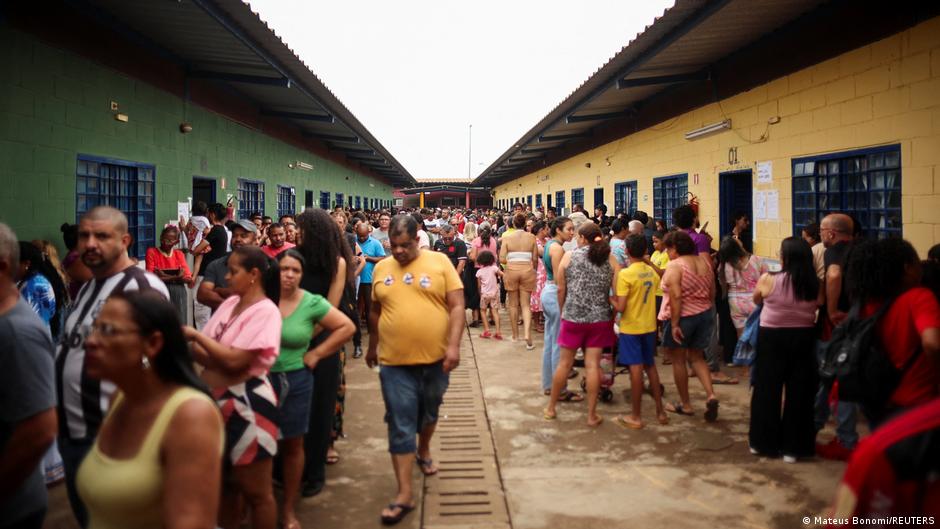
Brazil's presidential election first round pits Lula against Bolsonaro's son
Brazil is holding the first round of its presidential election, with incumbent Lula da Silva facing Flávio Bolsonaro, son of imprisoned former president Jair Bolsonaro. A runoff on 25 October will follow if no candidate wins over 50% of the vote.
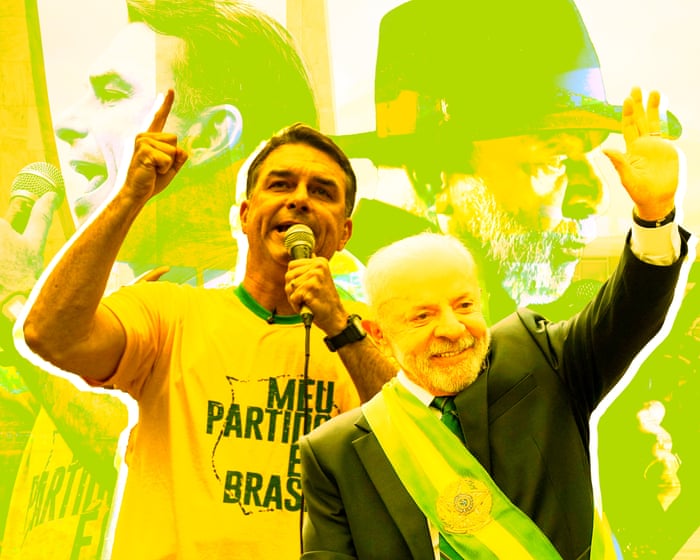
Brazilians are voting on Sunday in the first round of the country's presidential election, with polling stations closing at 21.00 BST. Brazil's president is chosen through direct popular vote, and a candidate must win more than 50% of valid votes to avoid a second round.
Opinion polls point to two clear frontrunners. The first is the 80-year-old incumbent, Luiz Inácio Lula da Silva, a long-serving left-wing leader now in his third term. His earlier two terms, from 2003 to 2011, coincided with a commodity-driven economic boom and significant poverty reduction. Because Brazilian presidents cannot serve more than two consecutive terms, a win this time would rule out another run in 2030. Lula was jailed on corruption charges in 2018, but his conviction was later overturned after he spent 580 days in prison.
His main rival is far-right candidate Flávio Bolsonaro, a 45-year-old lawyer and former senator from Rio de Janeiro, and the son of jailed former president Jair Bolsonaro. The elder Bolsonaro is serving a 27-year sentence for orchestrating a coup attempt after his 2022 election defeat, but has backed his son's campaign and hopes a victory could pave the way to his own release.
Polling suggests no other candidate is within reach of the two leaders, though it remains unclear who would prevail in a potential runoff scheduled for 25 October. Whoever wins would take office on 5 January 2027.
A key region to watch is Minas Gerais, a mountainous mining and farming state with 21 million residents that is larger in area than France and considered Brazil's bellwether. Since the return of democracy in the 1980s, no presidential winner has failed to carry Minas Gerais. Jair Bolsonaro won the state by more than 1.7 million votes in 2018 en route to the presidency, while Lula narrowly reclaimed it by fewer than 50,000 votes in 2022, also going on to win nationally.