British army cancels training in Kenya after defence agreement dispute
Kenya's refusal to ratify a bilateral defence deal has forced the British army to cancel military exercises, amid disagreements over jurisdiction and payments.
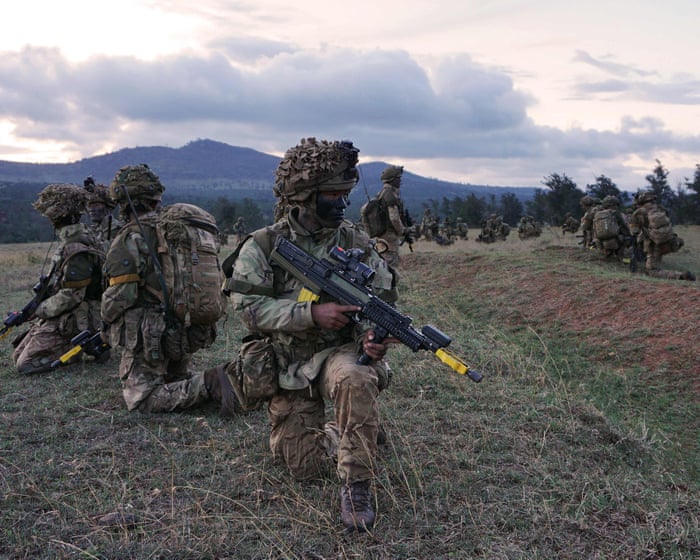
The British army has been forced to cancel training for its troops in Kenya after the Kenyan government declined to ratify a bilateral defence agreement.
While the UK government sought to renew the existing deal, Kenyan lawmakers demanded changes that would grant local authorities greater power to hold British soldiers accountable for crimes committed in the country.
According to Kenyan outlet Daily Nation, the dispute centres on which cases Kenya retains primary jurisdiction over, as well as the amount of money Britain pays Kenya to host the training camp.
Nelson Koech, chair of Kenya's national assembly defence, intelligence and foreign relations committee, said both governments are "actively engaging to address these outstanding issues".
As a result, a planned exercise involving the 1st Battalion the Duke of Lancaster's Regiment, due to begin in September, has been cancelled.
A Ministry of Defence spokesperson said: "The UK highly values its relationship with Kenya, which is underpinned by mutual benefit, respect and cooperation. The UK-Kenya Defence Partnership is one of the great strengths of our relationship."
"It is with regret that the necessary licences required to allow training to take place in Laikipia later this year have not been forthcoming. As a result, the planned training will now be conducted at an alternative location outside Kenya," they added.
Kenya also benefits from training of its own forces at BATUK, the British army base near Nanyuki, and the presence of British troops supports the local economy.
The MoD spokesperson said they recognised "the disappointment this decision will cause for those who would have benefited from the economic activity generated by the exercise" and reaffirmed the UK's commitment to the defence partnership.
However, there has been sustained pressure from Kenyans opposed to the British army's presence. Last year, a parliamentary report alleged human rights violations, environmental destruction and sexual abuse by British soldiers.
The most high-profile case is the death of Agnes Wanjiru, in which a British soldier has been charged with murder. Kenya has retained jurisdiction, and an extradition hearing is scheduled for November. Robert Purkiss denies the charge.
Legal proceedings had stalled since Wanjiru's death in 2012 but advanced under defence secretary John Healey, who as shadow defence secretary had urged the previous government to do more.
Koech said the committee had called for "stronger accountability measures, including jurisdiction over serious offences, enhanced protection for local communities, and implementation of recommendations arising from the BATUK inquiry".