British and French troops rehearse rapid airborne landing in Germany to defend NATO territory
More than 2,500 British and French service members took part in the RHINO TITAN exercise at Germany's Sennelager training area, practising defence against an opponent using drones and electronic warfare.
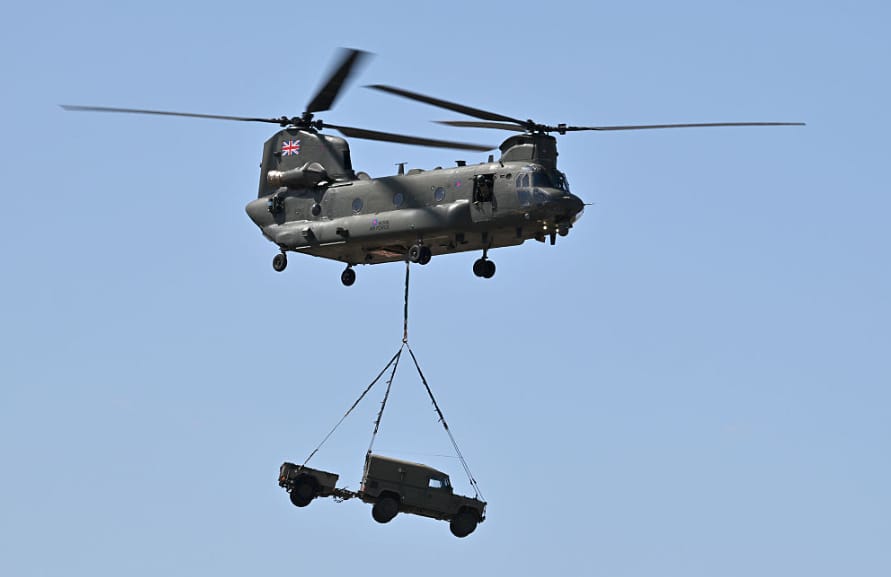
More than 2,500 British and French troops have completed the seven-week RHINO TITAN exercise at the Sennelager training centre in Germany. It was one of the largest British airborne operations in recent times, according to Rapporteur, cited by Ukraine's European Pravda. The aim was to test the forces of the two NATO members against a simulated adversary equipped with drones and electronic warfare systems.
Who took part
The exercise involved the UK's 16th Air Assault Brigade, the rapid reaction force of the British armed forces. Germany, as host nation, provided logistical support. A battle group from the 3rd Battalion, The Parachute Regiment (3 PARA) also took part, supported by a company from France's 3rd Marine Infantry Parachute Regiment.
About 600 paratroopers jumped in several waves from four Royal Air Force A400M Atlas transport aircraft during one of the tactical drills. Three RAF Chinook helicopters also supported the operation, including by airlifting a medical casualty reception point.
Purpose of the drill
The operation showed how troops can be deployed together with specialised equipment and supplies needed to start operations immediately after landing. Brigadier Ed Cartwright, commander of the 16th Air Assault Brigade, said the task was realistic: defending NATO territory against an enemy using drones and electronic warfare. He said these are the threats that would be faced on a modern battlefield.
The British Ministry of Defence said the exercise also demonstrated allied efforts to improve interoperability between armed forces and speed up the deployment of combat units.
Background
It was reported earlier that the French and British air forces had held joint nuclear exercises for the first time. German Chancellor Friedrich Merz has previously stressed that a potential European nuclear umbrella should complement the existing US nuclear shield.