Burnham meets Zelenskyy as first foreign leader, pledging continued UK support for Ukraine
New UK Prime Minister Andy Burnham hosted Volodymyr Zelenskyy in Portsmouth within his first week in office, emphasizing that Britain remains fully committed to Ukraine. Unlike his predecessor Keir Starmer, who faced criticism for over-focusing on foreign affairs, Burnham has prioritized domestic policy while relying on his team for international matters.
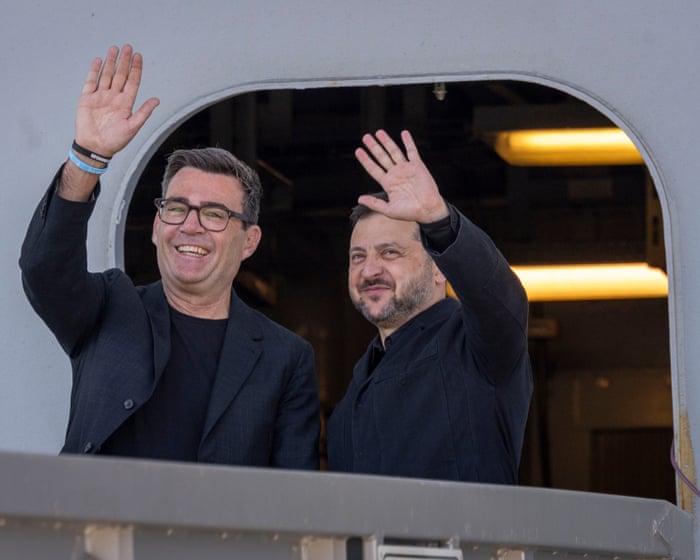
New UK Prime Minister Andy Burnham welcomed Ukrainian President Volodymyr Zelenskyy to a naval base in Portsmouth on Monday, marking his first international visitor since taking office just seven days earlier. Burnham told Zelenskyy that the meeting was "no accident" and intended to send a clear message: the UK stands with Ukraine 100%, and it will honour every commitment made by previous governments.
Burnham's predecessor, Keir Starmer, made Ukraine a defining relationship of his premiership. During his two years in office, Starmer visited Ukraine four times and hosted Zelenskyy in the UK on four occasions. In his final week as PM, Starmer received the order of freedom medal for leading the coalition of the willing and helping persuade Donald Trump to maintain support for Ukraine. However, Starmer faced criticism for spending too much time on international issues, with opponents nicknaming him "never here Keir" and even his own team urging him to focus on domestic matters.
Burnham has made clear his priority is domestic policy, reflecting his own political instincts and wariness of repeating Starmer's mistakes. His allies note that day-to-day foreign affairs will be delegated to his team, including Foreign Secretary Ed Miliband and senior diplomatic adviser Jonathan Powell, who stayed on from Starmer's administration.
Some Labour MPs suggest Miliband may enjoy more freedom than previous foreign secretaries since Burnham is less personally interested in international issues. However, they warn that complex global crises can "crash land" on domestic policy, as Starmer found with Trump. Burnham has indicated he won't shy away from standing up to the US president, telling the Guardian last month that the relationship is important but not to the point of agreeing with everything he says.
Some analysts believe Starmer already did the hard work on foreign policy, particularly on Ukraine, the EU, and the US, so Burnham can largely stick to the same course. Starmer himself advised against separating domestic and international priorities, but Burnham's team believes they can balance both—aware that events in Iran, for instance, could disrupt their domestic agenda.