Apple CarPlay vs. CarPlay Ultra: What's the Difference?
Apple offers two versions of CarPlay — the familiar standard one and the newer Ultra, which integrates much more deeply into a car's systems. Ultra, however, remains available in only a handful of vehicles so far.
Apple's CarPlay has brought iPhone apps and media to car dashboards for more than a decade, and most drivers know it well. Fewer are aware there's a second, more advanced version called CarPlay Ultra, which offers far deeper integration but so far reaches only a small number of vehicles.
The familiar standard version
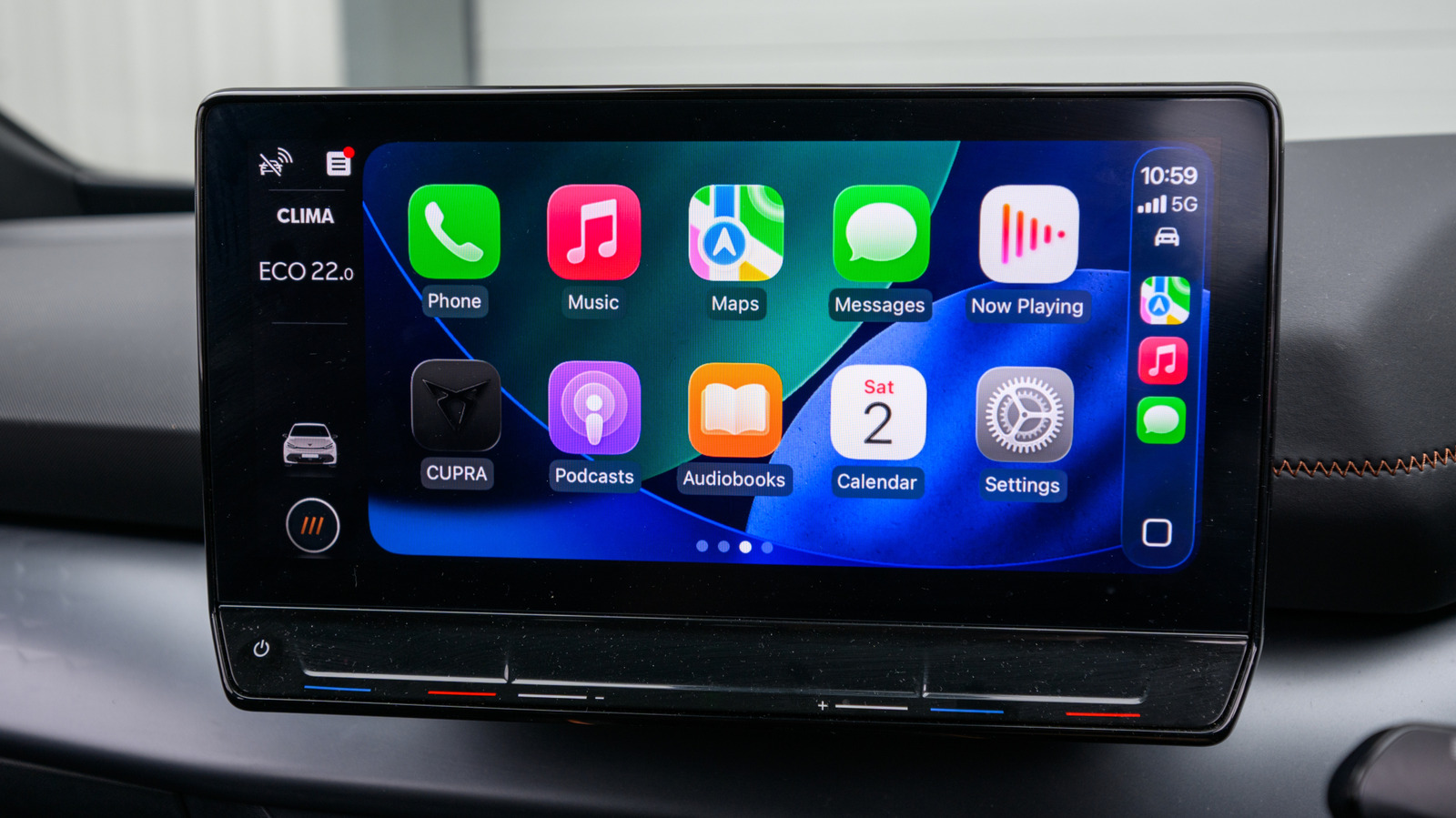
The original CarPlay debuted in 2014 alongside iOS 7.1. Drivers connect their iPhone via USB or wirelessly, and the car's screen displays a simplified, iOS-style interface. It supports a limited set of apps, mostly centered on navigation, streaming and messaging, letting drivers play music or start a route with a few taps or a Siri command. Because standard CarPlay isn't deeply woven into a car's own systems, drivers often still need to exit the interface to adjust things like driving modes or climate controls.
What sets Ultra apart
Apple first teased a more ambitious version of CarPlay back in 2022, aiming to extend it across all of a car's screens rather than just the infotainment display. CarPlay Ultra can control elements such as the speedometer and fuel gauge, and even lets drivers customize their look, similar to a racing video game. Vehicle functions like air conditioning and the radio are also folded into the CarPlay Ultra interface, removing the need to leave it for everyday controls.
Availability, though, remains very limited. While standard CarPlay is supported in more than 800 vehicle models, CarPlay Ultra is currently found only in select luxury Aston Martin models, and only in the US and Canada. Porsche once teased support for the technology, but that has yet to materialize. Ultra requires an iPhone 12 or newer and works only over a wireless connection. Apple has said it plans to bring Ultra to more vehicles eventually, but based on its rollout so far, broader adoption appears to be a slow process.