CBSO/Yamada’s daring pairing: Poulenc and Adams blend wit and brilliance
Kazuki Yamada and the City of Birmingham Symphony Orchestra paired John Adams’ monumental Harmonium with Francis Poulenc’s witty music, creating a stylish and thrilling concert programme.
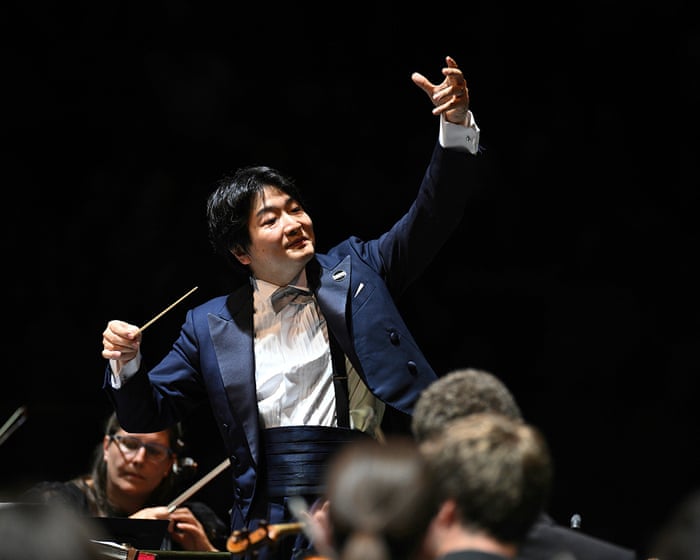
Kazuki Yamada and the City of Birmingham Symphony Orchestra (CBSO) chose an unconventional yet brilliant programme, pairing two seemingly contrasting composers. American minimalist John Adams’ 1980 work Harmonium — a sonic wrestling with love, death and desire — was set alongside music by Francis Poulenc, one of the wittiest, most self-puncturing composers in the business.
Poulenc couldn’t even bring himself to call his 1948 piece a symphony; instead he named it Sinfonietta, deflating any grandeur. The work unfolds as a series of impeccably shaded dances, marches and melodies that thumb their nose at development. Yamada’s interpretation was lucid and urbane — a crisp musical suit with an Hermès pocket-square of whimsy visible in silky woodwind solos and harp.
The highlight was Poulenc’s Concerto for Two Pianos, performed by Dutch duo the Jussen brothers, who have played it since their teenage years. Making their Proms debut in matching suits, they attacked this mischievous musical satire with irrepressible rhythmic energy, their heads nodding from either side of the stage and fingers flying as one. It was enormously stylish fun.
A performance of Harmonium a few weeks earlier in Birmingham had lacked choral power. But this time the CBSO Chorus was bolstered by the Sydney Philharmonia Choirs, providing the rippling textural canvas Adams demands — voices treated as pulsing points of light in “Negative Love” and an explosive, ululating jangle in “Wild Nights”. Only the central movement, “Because I could not stop for Death”, sagged slightly where it should have held rapt attention. Yet this was a minor quibble in a frankly monumental achievement.