How high should home theater speakers really be placed?
Audio experts note that front speakers in a home sound system perform best at seated ear height, while subwoofers and surround speakers follow different rules. The guidance also covers the 38% and 83% placement rules for room layout.
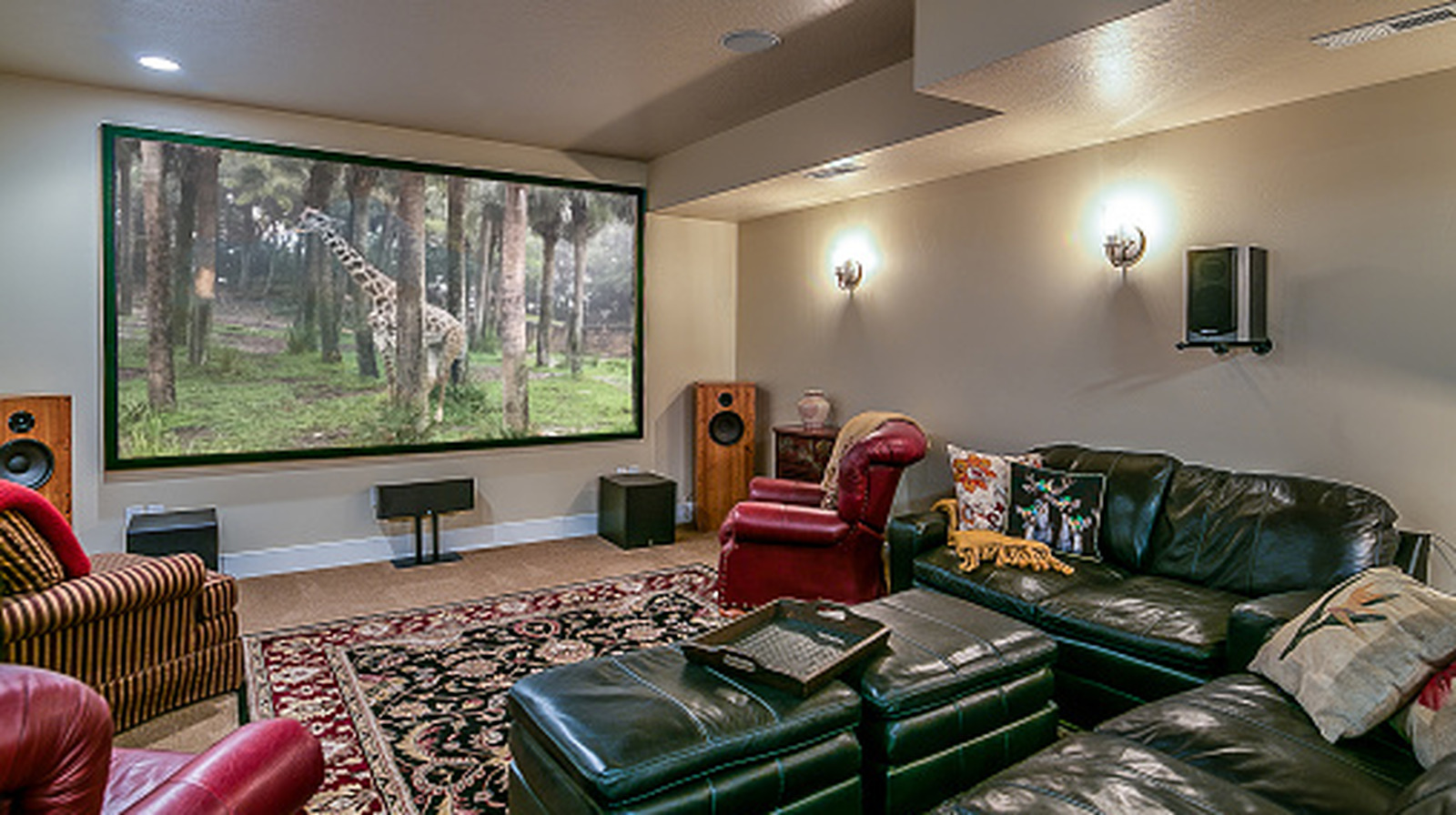
Setting up a home sound system involves more than plugging in speakers — physics dictates specific rules about height and placement that can make or break sound quality.
Front speakers belong at ear level
Front, left and right speakers are considered too high when mounted well above a listener's ears while seated. Ideally, sound should travel in a straight, level path from speaker to ear. These channels typically produce forward-firing, high-frequency sound, which is more directional than bass — placing them too high causes dialogue detail and effects like cymbals to sound muffled or less clear.
Different rules for different channels
The center channel should sit as close as possible to the height of the front speakers, though minor deviations are acceptable — for instance, tilting it upward slightly if placed below a TV. Surround speakers offer more flexibility and can sit 2 to 3 feet above seated ear level, but placing them too high blurs the distinction between sound from behind or beside the listener and sound from overhead. Subwoofers are the exception, since low-frequency sound is far less sensitive to vertical placement, making floor placement typical and effective, though room position still affects bass response.
The 38 percent and 83 percent rules
As a starting point for a rectangular room, the 38 percent rule suggests placing the primary listening seat roughly 38 percent of the room's length from the front wall, helping to avoid bass buildup issues common at the room's center. The 83 percent rule then guides speaker spacing: the distance between the front speakers should be about 83 percent of the distance from the listening seat to their midpoint. Both rules govern distance rather than height, and are meant as a baseline for further fine-tuning.