How big and powerful is SpaceX's Starship rocket?
Starship, the two-stage launch vehicle built by US company SpaceX, is the tallest and most powerful rocket ever flown, with 18.1 million pounds-force of liftoff thrust.
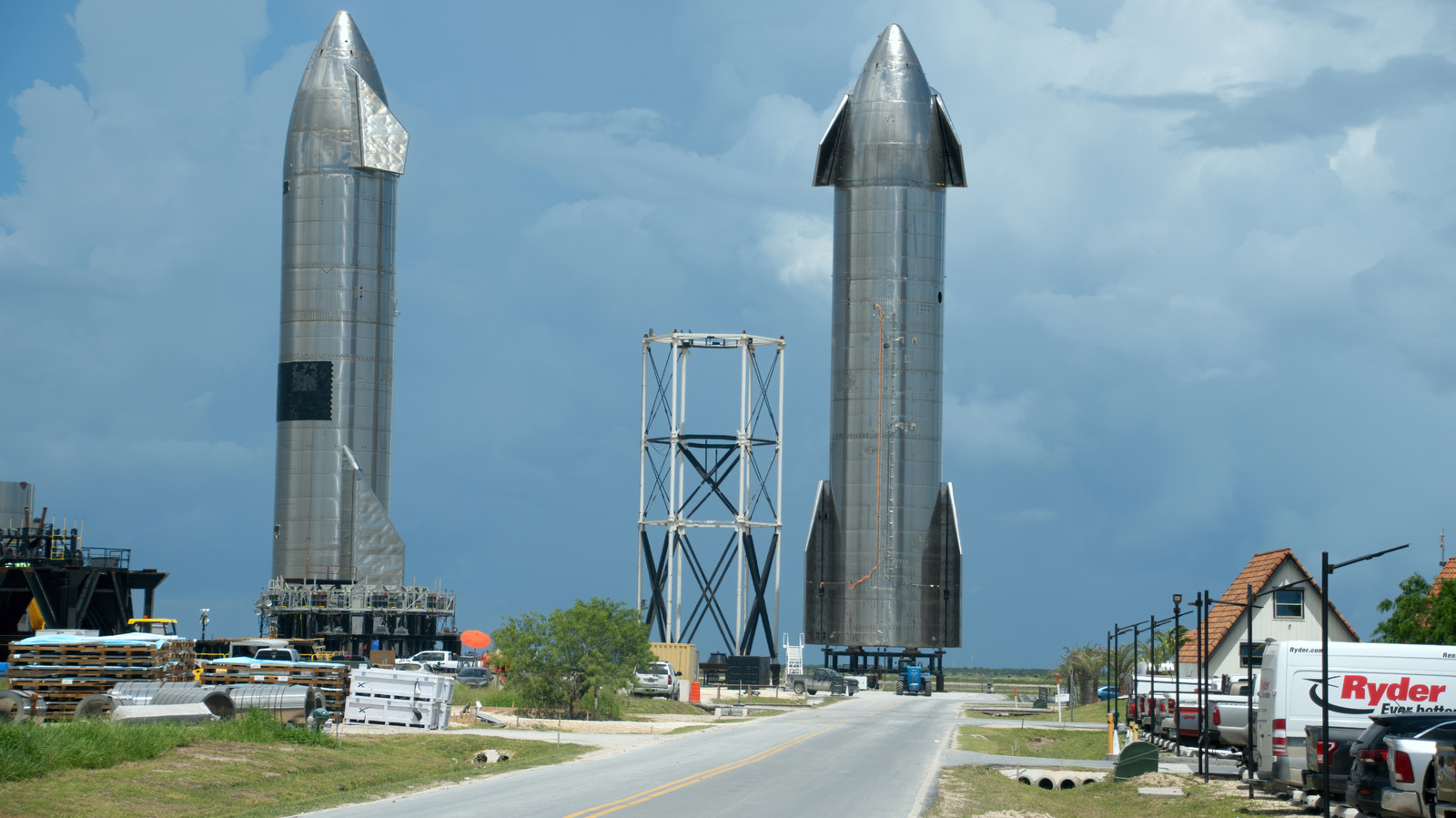
Starship, the launch vehicle developed by US space company SpaceX, is the tallest and most powerful rocket ever flown. With both stages stacked it stands 407 feet (about 124 meters) tall and produces 18.1 million pounds-force of liftoff thrust. The system is designed to carry very large payloads and, eventually, people and cargo beyond Earth orbit.
Dimensions
The rocket has two parts. The lower one, the Super Heavy booster, is 236.2 feet tall and provides the initial push from the launch pad. On top sits the 170.6-foot Starship spacecraft. According to the source, the full vehicle is taller than Hyperion, the tallest known living tree, and one-third taller than the Statue of Liberty including its pedestal. SpaceX intends to recover and reuse both stages.
Power
Super Heavy carries 33 Raptor engines burning liquid methane and liquid oxygen. For comparison, NASA's Space Launch System produces a maximum thrust of 8.8 to 9.4 million pounds. After separation, Starship is driven by three standard Raptor engines and three Raptor Vacuum engines built for operation in space; SpaceX lists the upper stage's thrust at roughly 3.5 million pounds-force. Super Heavy's propellant capacity is listed at 3,650 metric tons, with another 1,600 metric tons in Starship.
During the first full-stack launch in April 2023, the booster's exhaust shattered the concrete launch pad and scattered debris across 385 acres. That booster was rated at 16.7 million pounds of thrust, slightly less than the one used for the September 28, 2026 launch.
Flying to the Moon
For NASA's planned lunar-landing missions, Starship will still need to refuel in Earth orbit, because the lunar lander uses a significant share of its propellant just reaching orbit. The plan has a propellant depot launching first, followed by tanker Starships, and finally the lander, which docks with the depot and takes on fuel. Only then does the crew launch aboard NASA's Orion spacecraft, part of the Artemis program. The Starship lander will carry two crew members to the lunar surface and back. Moving and storing extremely cold propellants in space is a major technical challenge.