Claas Axion 8.290: Most Powerful Tractor in New Series Tested in the Field
Polish agricultural portal farmer.pl field-tested the Axion 8.290, the most powerful tractor in Claas's new Axion 8 series, rated at 313 hp. The short test highlighted the quiet cab and the automation.
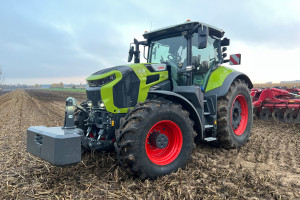
Polish farm machinery portal farmer.pl carried out a short field test of the new Claas Axion 8.290 tractor, made by agricultural equipment manufacturer Claas. It is the most powerful model in the new Axion 8 CMATIC series, which replaces the earlier Axion 800 line. The tractor has a maximum output of 313 horsepower and uses a continuously variable CMATIC transmission.
Models in the range
The Axion 8 series has three models: 8.240, 8.270 and 8.290, with maximum outputs of 264, 291 and 313 hp respectively. All use a six-cylinder 6.7-litre FPT engine and the CMATIC transmission. A Maxi Care Focus protection programme is also available, covering key components for up to five years or 5,000 operating hours, whichever limit is reached first.
The cab
Testers named the cab as the main strength. The new four-pillar cab is spacious and has an electrically adjustable seat with a massage function. According to the manufacturer, the noise level in the cab is about 67 dB, 3 dB lower than in the previous generation. Visibility is helped by cameras at the front, rear and on the rear window.
Work in the field
In the test, the tractor worked with a 5-metre disc harrow at a depth of about 15 cm. The soil was fairly light, but damp and spread with digestate. The tractor worked at about 12 km/h without visible wheel slip. Representatives of the farm said another tractor of similar power pulls the same harrow at roughly 10–10.5 km/h. The journalists note that this was not a proper comparative test.
The CEMOS system recommended settings, including lower tyre pressure, after the parameters of the tractor and implement were entered. The Dynamic Power system automatically adjusts available engine power to demand, while Auto Load Anticipation lets the drivetrain react ahead of an expected rise in load.
Limitations
The short test could not assess durability, actual fuel consumption or running costs. The editors conclude that the main progress lies less in raw power than in how it is used and in easing the operator's workload.