COP31 in Antalya ends without joint decision, but UNEP points to several areas of progress
The UN climate conference COP31 in the Turkish city of Antalya ended without agreement on a joint final decision, as countries could not resolve disputes over fossil fuels and climate finance. The UN Environment Programme has compiled eight takeaways showing practical progress as well.
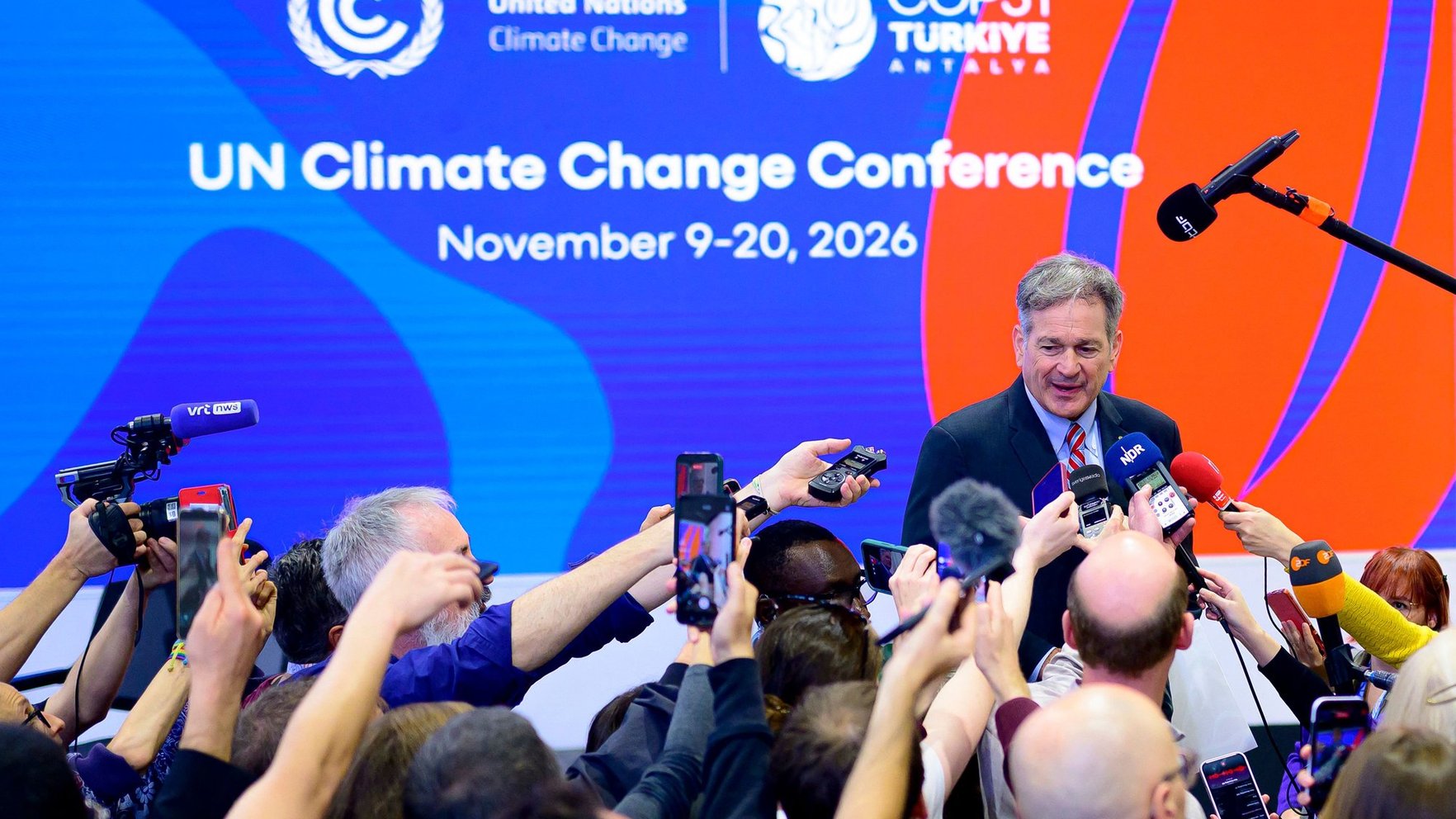
The UN climate conference COP31, held over more than two weeks in the Turkish city of Antalya, closed without countries agreeing on a joint final decision. The main disputes concerned reducing fossil fuel use and climate finance. The UN Environment Programme (UNEP) stresses, however, that the conference was not without results, and has compiled eight key takeaways.
The warming limit and methane
In its latest assessment, UNEP concluded that exceeding the Paris Agreement goal of limiting global warming to 1.5 degrees Celsius, at least temporarily, has become practically unavoidable. The debate is therefore shifting toward how far and for how long the limit will be exceeded. UNEP says every tenth of a degree still matters, because more warming increases the risks of extreme heat, drought, floods and sea level rise.
Governments and partners announced more than $480 million in funding to cut emissions of methane and other short-lived climate pollutants. Martin Krause, director of UNEP's Climate Change Division, likened such action to pulling the "emergency brake" on climate change. Countries also pledged to cut emissions of sulfur hexafluoride (SF6), a greenhouse gas used, for example, in electrical equipment.
Heat, buildings and waste
Countries backed a global roadmap for heat resilience and sustainable cooling. Nearly two billion people worldwide still lack adequate access to cooling. In addition, 46 countries endorsed the Antalya agreement on energy-efficient buildings, which aims to speed up renovation, electrification and efficiency improvements. Attention also went to food waste, since organic waste decomposing in landfills produces methane.
Money and the way forward
Developing countries called for more funding for adaptation. UNEP estimates they will need hundreds of billions of dollars a year for this by 2035, while current financing flows fall well short.
COP31 also launched the second Global Stocktake, which assesses how far countries have come toward the Paris Agreement goals. Krause admitted that the lack of a joint decision is a disappointment, but said progress has still been made, including in companies' readiness to invest in clean energy.