Democrats Vote to Keep South Carolina First in 2028 Primary Calendar
The Democratic National Committee's rules committee voted to maintain South Carolina as the lead-off state for the 2028 presidential primaries, followed by five other states, aiming to better reflect the party's diverse electorate.
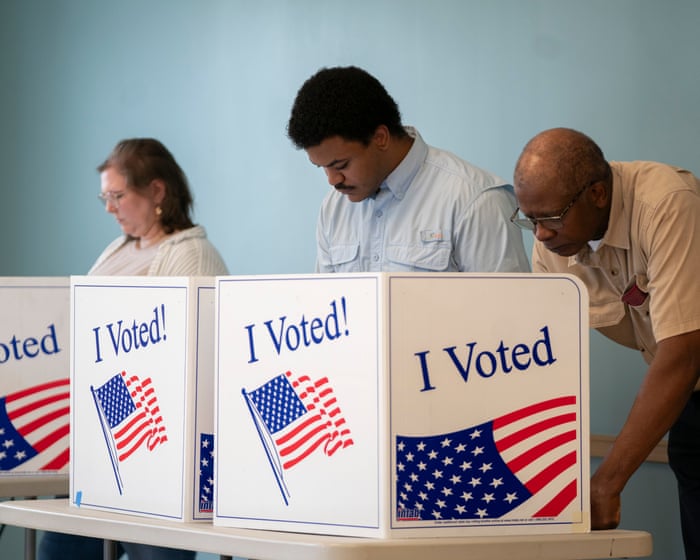
The Democratic National Committee's rules and bylaws committee has voted to recommend South Carolina as the first state to hold a primary in the 2028 presidential election cycle. During a meeting in Washington DC on Friday, the committee approved a calendar that places South Carolina's primary on January 22, 2028, followed sequentially by Nevada, New Hampshire, New Mexico, Michigan, and Virginia. The full DNC is expected to vote on the proposal next month.
Committee co-chairs Minyon Moore and James Roosevelt Jr. described the proposed schedule as a "rigorous, fair, and efficient" plan aimed at helping Democrats reclaim the White House in 2028. The decision continues the party's shift away from the traditional early states of Iowa and New Hampshire, which are predominantly white. Instead, Democrats have prioritized states with larger African American and Latino populations, reflecting the party's reliance on minority voters for electoral success.
South Carolina played a pivotal role in reviving Joe Biden's 2020 campaign, and as president, he advocated for the state to lead the 2024 primary calendar. Representative James Clyburn, a longtime South Carolina congressman, highlighted the state's four distinct cultures, affordable media market, and demographics that mirror the party's voter base. Nevada's Democratic chair, Daniele Monroe-Moreno, also made a case for her state, noting its racial diversity and Donald Trump's 2024 victory there, arguing Nevada represents the coalition Democrats need to win.
The new early voting states are all considered presidential battlegrounds or host competitive Senate and House races. They have substantially more Black and Latino voters than the previous early states, as well as higher proportions of union members and voters without college degrees—groups that have proven challenging for many Democratic candidates in recent elections.