A decade after Brexit: Britain weighs costs and gains as it searches for a new leader
A decade after the Brexit vote, two new reports find that economic forecasts were exaggerated but that benefits have also been limited. Political instability continues as Prime Minister Keir Starmer resigns.
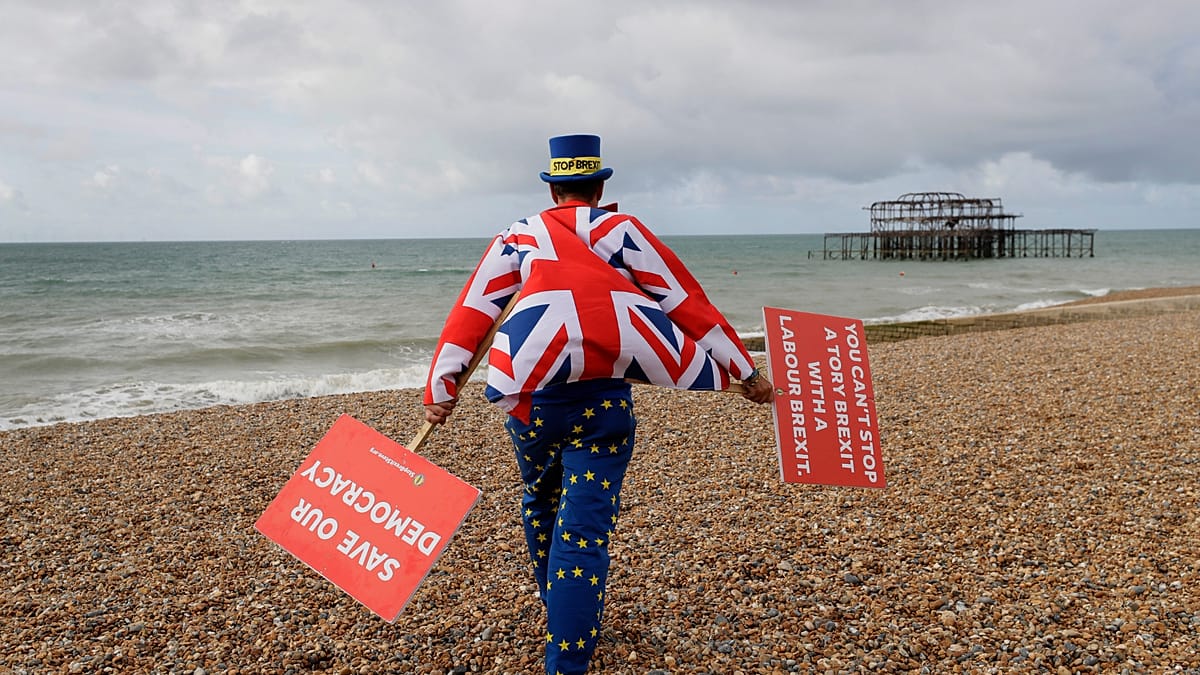
The tenth anniversary of the June 23, 2016 referendum reveals that the question remains unsettled. Two recently published assessments—from Allianz Research and Deutsche Bank—reach similar conclusions: the worst fears were overstated, but the promised dividends also failed to materialize. Allianz sums it up as "resilience without revival."
The timing is sharp. On Monday, the day before the anniversary, Prime Minister Keir Starmer announced his resignation after a collapse in Labour support and a rapid rise of the hard-right Reform UK. His departure paves the way for Britain's seventh prime minister in ten years, likely former Greater Manchester mayor Andy Burnham. Political instability has become one of the most visible legacies of Brexit.
Allianz notes that the UK has had six prime ministers since the referendum, compared with four during the entire 1997–2016 period. Deutsche Bank points to the economic costs of prolonged policy uncertainty. Yet many dire predictions did not come true. The Treasury's warning of an immediate recession proved inaccurate: the economy kept growing, and unemployment fell to around 4%. House prices, feared to drop by 18%, rose by about 7%.
However, forecasters were vindicated on sterling, which dropped sharply, feeding into higher inflation, and has never fully recovered against the dollar and euro a decade later. Both banks identify real and lasting damage over the decade. Deutsche Bank, using a model comparing the UK to a synthetic "doppelganger," estimates GDP is 4% lower, employment 2% lower, and consumer prices 0.7% higher due to Brexit. Allianz reports goods trade with the EU is about 21% lower, and business investment stalled for years.
Yet the picture is not all negative. Britain has leaned harder into its services strengths. Allianz notes that ICT exports to the EU have almost doubled, and London remains the world's second-largest exporter of financial services. Deutsche Bank points to gains from regulatory autonomy in life sciences and AI, and an improved current account as EU budget contributions fell. Looking ahead, Deutsche Bank suggests that closer EU cooperation on food standards, professional qualifications, and youth mobility could boost GDP by 0.4–0.8%. Allianz counters that Brexit exposed deeper UK problems rather than caused them.
Polls suggest the public might support rejoining the EU under favourable terms, but no major party has the appetite. As a new prime minister prepares to inherit the dilemma, the anniversary lands less as a verdict than as an unfinished argument.

/nginx/o/2026/02/16/17450973t1hb27f.jpg)
