Vivi trains carry 18 million passengers in ten months
Latvian rail operator Pasažieru vilciens carried 18 million passengers in the first ten months of this year, slightly fewer than a year earlier. Passenger numbers rose on all routes in October compared with October 2025.
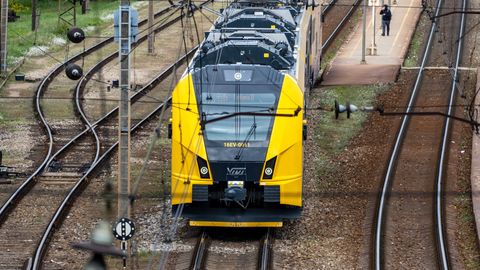
Pasažieru vilciens, Latvia's domestic passenger rail operator that trades under the Vivi brand, carried 18 million passengers in the first ten months of this year. That is 0.1% or 23,000 fewer than in the same period of 2025, but 1.7 million more than in 2024. The company provided the figures to the news agency LETA.
Repairs affected the Tukums line
The biggest drop compared with last year was on the Tukums line, where 464,000 fewer passengers were carried because of repair work by Latvijas dzelzceļš, the state railway infrastructure manager. Even so, this line still has the most passengers, with more than six million carried over the ten months.
Passenger numbers grew this year on three electrified lines. The sharpest rise, 7% or 187,600, was on the Jelgava line. The Aizkraukle line gained 4%, or almost 169,000, and the Skulte line 3%, or 61,600. On diesel trains between Riga and Daugavpils, 15,000 more passengers were carried than last year, while on the Lugaži–Valga route the number rose by 15%.
October figures
In October the number of passengers increased by 5.9% compared with October 2025, reaching almost two million. Growth was recorded on all routes; among electrified lines, the Tukums line saw the fastest rise, at 7%.
Train punctuality, which measures how closely trips follow the timetable, was 96.48% in October. The company says it kept the figure high even though repairs to electrified infrastructure were under way on the Jelgava line. Where track availability is limited on certain sections, a disruption to one train often causes a chain reaction affecting several later trips.
Background
Last year a broad modernisation of rail infrastructure began: Latvijas dzelzceļš is rebuilding passenger platforms and upgrading the electrified network on several lines. The operator urges passengers to follow timetable changes. In 2025 it carried 21.333 million passengers in total, 9.7% more than the year before. Pasažieru vilciens was established in 2001, when domestic passenger services were separated from Latvijas dzelzceļš.