Ten of Europe's most eccentric mountain huts, from a battleship turret to a Cold War bunker
The Guardian has rounded up ten remarkable mountain huts across Europe, from a Spanish shelter built from a scrapped US battleship's gun turret to a Norwegian hut reached through a former Nato communications tunnel. Each combines remote access with an unusual backstory.
The Guardian has published a survey of ten distinctive mountain huts across Europe, each notable for its difficult access and unusual history.
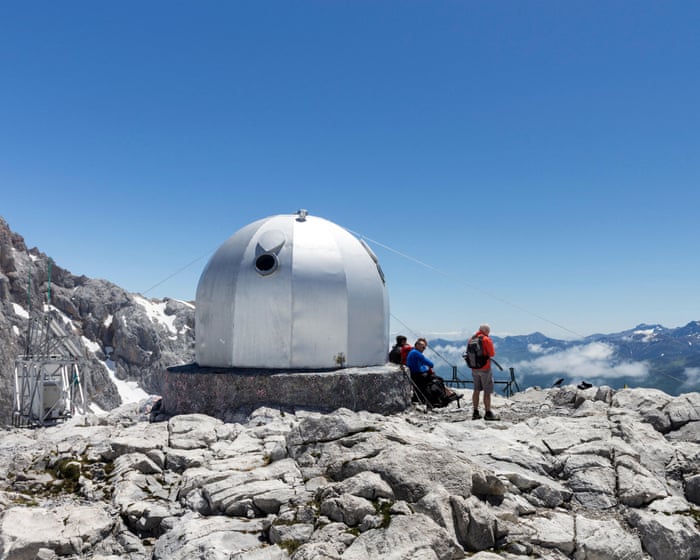
In Spain's Picos de Europa, at 2,325 metres, sits Cabaña Verónica, a six-person shelter that was originally a gun turret from a US navy battleship scrapped in Bilbao in 1960. Engineer Conrado Senties had it hauled up by horseback and reassembled on a rocky outcrop.
In Sweden, more than 100 miles north of the Arctic Circle at 1,228 metres, Låktatjåkko is a timber-clad hut with no phone signal, known for serving waffles with cloudberry jam by the fire.
Norway's Gaustatoppen hut is reached via a funicular railway bored into the mountain and tunnels once part of a Cold War-era Nato communications station, though the hut itself dates to 1893.
In Slovakia's Tatra mountains, Chata pod Rysmi sits near the summit of Rysy (2,501 metres). Built in 1933, it has been repeatedly destroyed by avalanches and rockfalls, so it only opens from 1 June to 31 October.
Slovenia's Kredarica hut, near the summit of the country's highest peak, Triglav, is heavily visited, as nearly every Slovene aims to climb it once. On Corsica's renowned GR20 trail stands the spartan Ciottulu di Mori, with communal sleeping for 26.
Also featured are Iceland's coastal Breiðuvik hut, part of a 40-strong network, and Scotland's mountain bothies — former miners' or shepherds' cottages maintained by volunteers.
In Italy's Dolomites, the list highlights Rifugio Nuvolau, built in 1883, and Rifugio Lagazuoi, situated above first world war frontline tunnels and run by the same family since local guide Ugo Pompanin built it in 1965.
